Good-Ark — discrete power semiconductors: rectifiers, Schottky, TVS, MOSFETs, SiC and IGBT
Request a Quote

What Is a Diode? The One-Way Valve of Electronics, Explained With Everyday Pictures
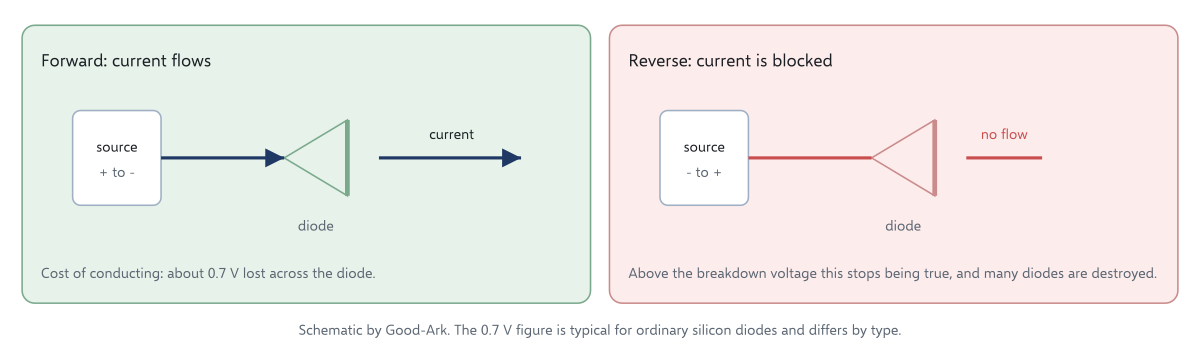
Updated: October 27, 2026 A diode is a two-terminal device that conducts easily in one direction and blocks in the other—electronics’ one-way valve—characterized mainly by VF, VRRM, and current limits. Below is a practical definition, the ratings that matter, and where this part sits among related guides: How to choose the right power rectifier, 1N4001G … Read more
Wide-Bandgap Semiconductors Explained in One Sitting

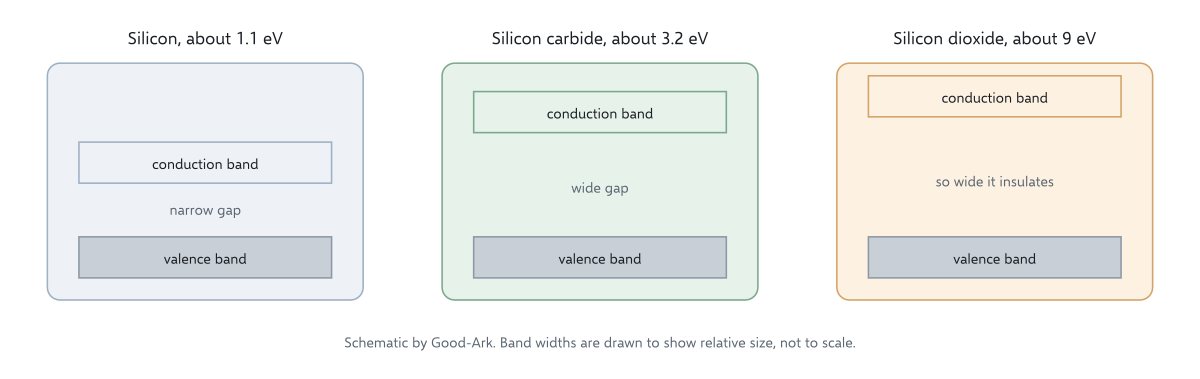
Every material used to make a semiconductor device can be described by one number: the energy an electron must gain to break free of the atomic lattice and start conducting. That number, the band gap, predicts how much voltage the material can hold, how much current it leaks when hot, and even what colour light … Read more

SiC in Solar Inverters: Why a Few Percent of Efficiency Matters

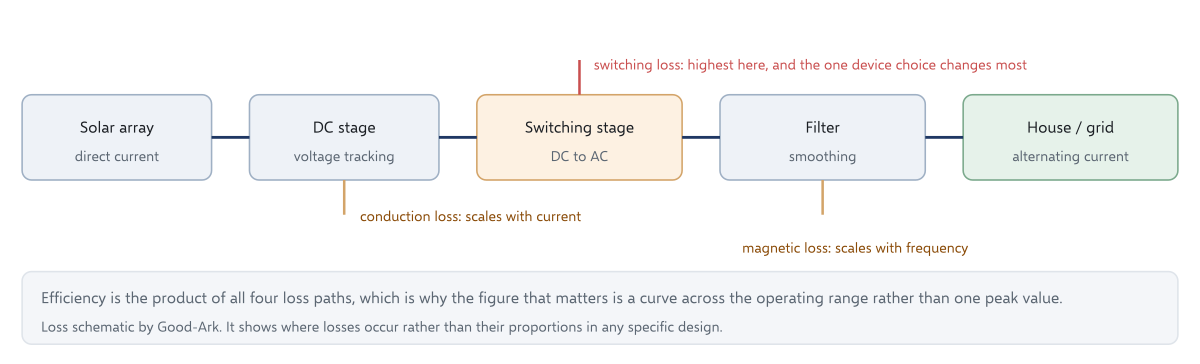
An inverter is the only part of a home solar system that works every day the sun rises, and it is usually the first major component to be replaced. Its efficiency is therefore not a laboratory number: every per cent is energy that either reaches your house or becomes heat inside a box mounted on … Read more

Why Are SiC Devices Expensive, and When Are They Worth It?

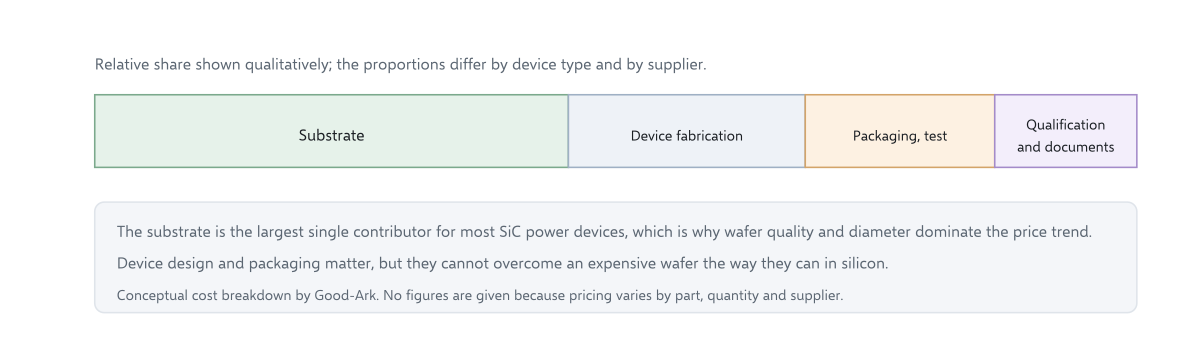
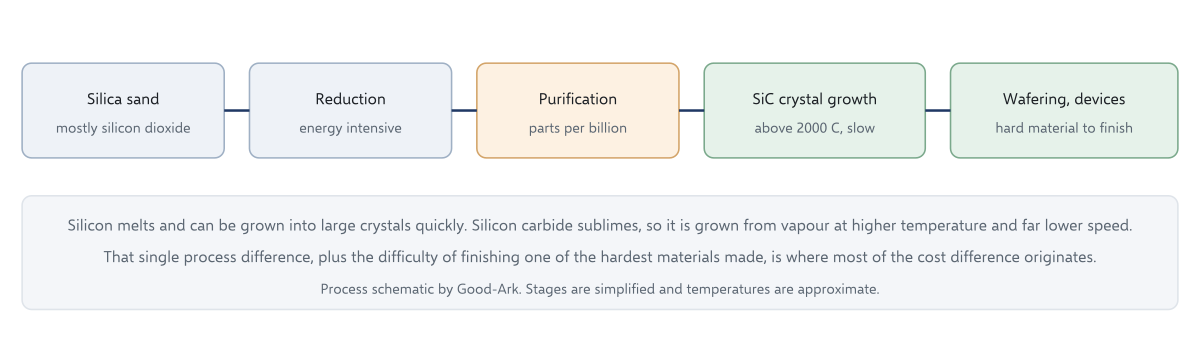
The reason a silicon carbide device costs several times what an electrically comparable silicon part costs is not difficult to understand, and it is almost entirely upstream of the device. The expensive part is the wafer, and the wafer is expensive because growing this crystal is slow, hot and difficult. Last updated: October 16, 2026 … Read more

SiC vs Silicon: Why Some Electric Cars Charge Faster

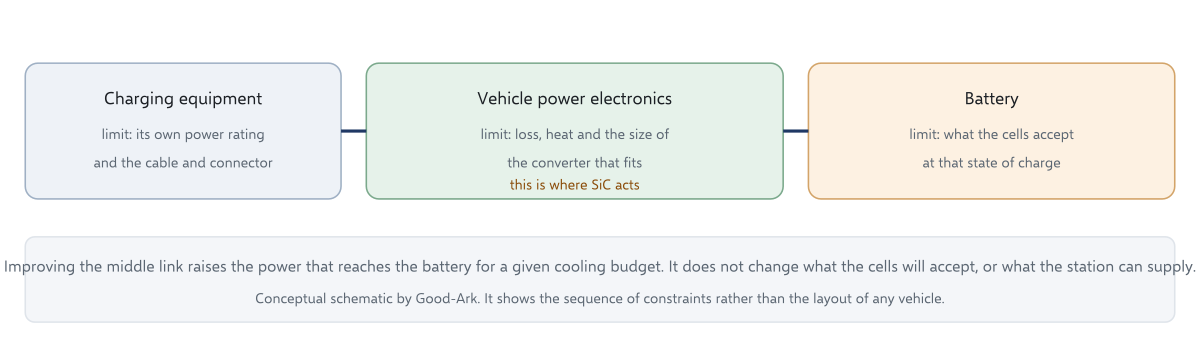
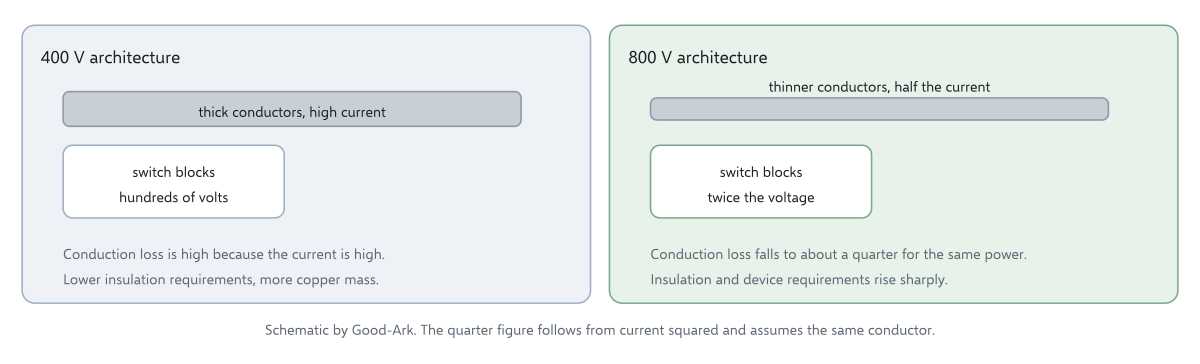
Two cars with similar batteries can charge at noticeably different rates, and part of the difference sits in the power electronics rather than in the cells. Silicon carbide is one reason a converter can handle more power in a smaller, cooler box — but it is an enabler rather than the cause, and understanding where … Read more

What Is Silicon Carbide (SiC)? A Beginner’s Introduction

Updated: October 27, 2026 Silicon carbide (SiC) is a wide-bandgap semiconductor used for high-voltage, high-frequency power devices (MOSFETs, Schottky diodes) that cut switching loss versus silicon at the cost of gate-drive and packaging care. Below is a practical definition, the ratings that matter, and where this part sits among related guides: SiC MOSFET vs Si … Read more

How Does a Surge Protector Work? (And When It Quietly Stops Working)

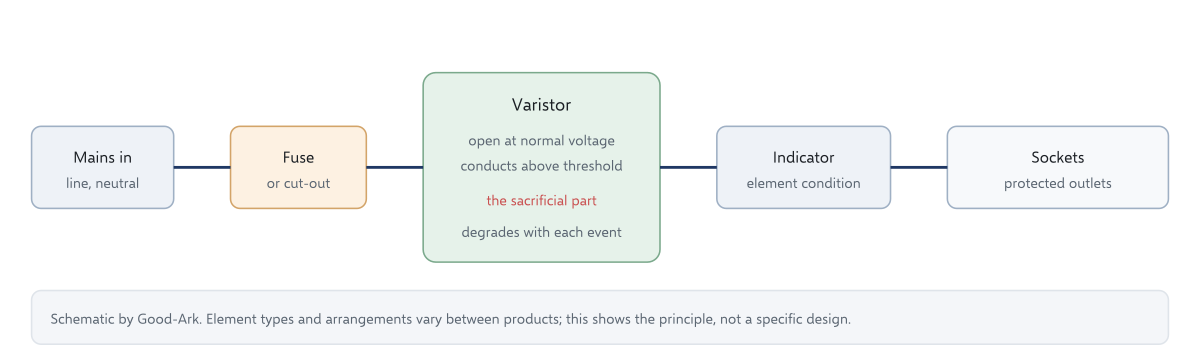
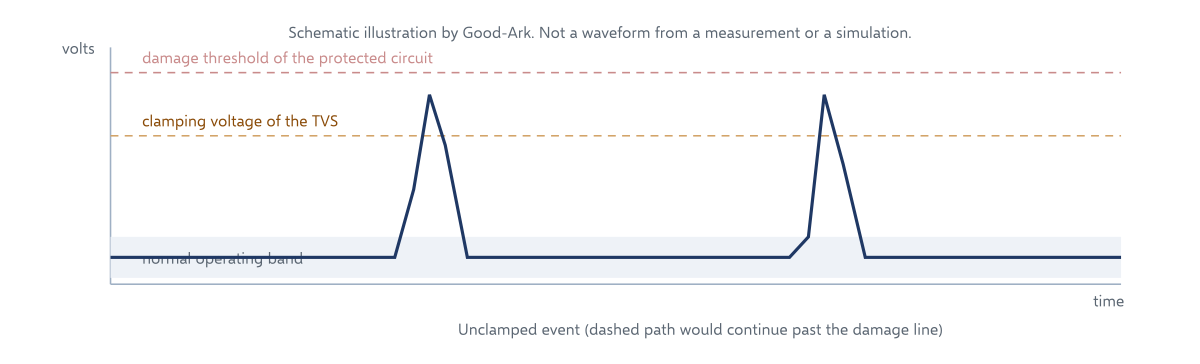
Updated: October 27, 2026 A surge protector diverts or clamps excess voltage so downstream electronics see a safer residual—using MOVs, GDTs, TVS diodes, filters, or staged combinations. A retail “surge protector” label is not one technology; clamp level and coordination decide what survives. Learn how common stages work, what joule ratings miss, and when board-level … Read more

ESD Protection for Beginners: Why a Tiny Diode Saves Your Phone

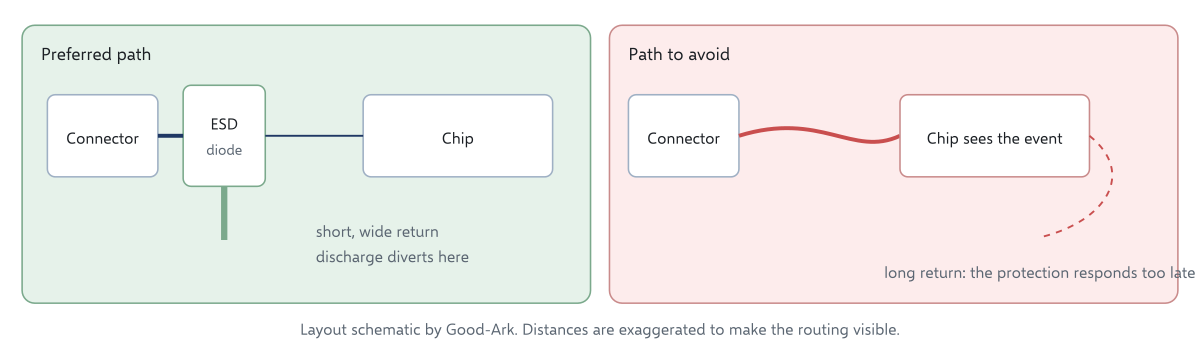
Updated: November 9, 2026 The smallest part on a phone circuit board is often a protection diode, a few tenths of a millimetre across, and it exists because the connector next to it is a doorway. Anything a user touches is a place where a static discharge can enter, and the protection part decides whether … Read more

TVS vs Zener Diode: Two Similar Parts With Two Very Different Jobs

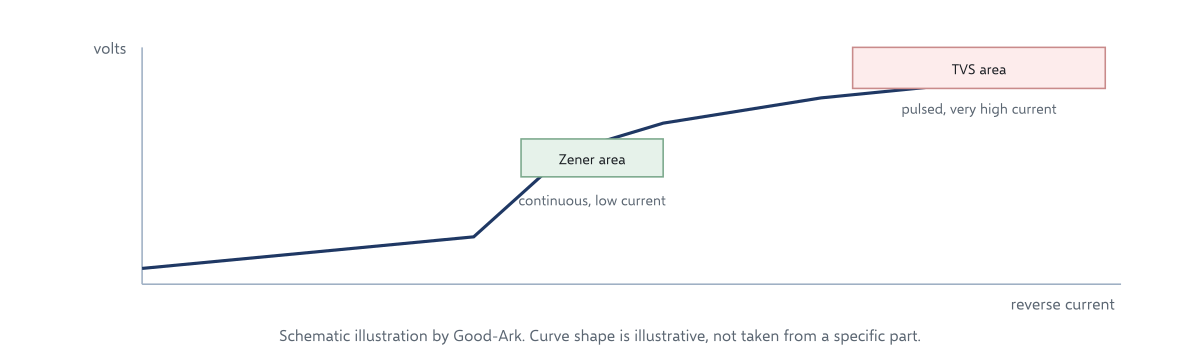
Updated: October 27, 2026 Use a TVS when the job is absorbing surge or ESD energy with a characterized clamp; use a Zener when the job is setting a DC reference or soft regulation at low current. Both avalanche, but the datasheets answer different questions. If you are mid-selection on surge parts, jump to the … Read more

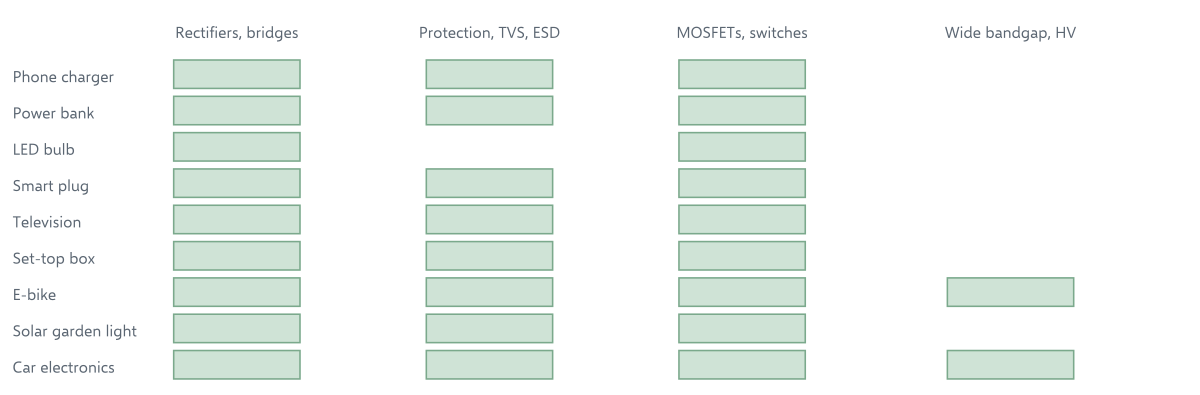
The Good-Ark Product List You Already Own: Ten Everyday Gadgets and the Parts Inside Them

Updated: November 9, 2026 There is no way to see the components inside a sealed product without opening it, and opening it is usually the wrong first step. What you can do is learn the pattern: a small number of everyday objects contain almost the whole discrete device catalogue, each in a predictable place. This … Read more

Need a part number checked against your design?

Send the topology, current and voltage class. Good-Ark sales and application engineering will confirm the closest device, package and qualification status.

Copyright Suzhou Good-Ark Electronics Co., Ltd. All Rights Reserved