Solar and PV Electronics Hub
Use the Solar and PV Electronics Hub to choose devices, check ratings, solve failures, verify alternatives, and reach the right Good-Ark technical support path.
23 guides
Follow energy through a solar system: the panel, bypass and blocking paths, inverter and battery-charging circuit. The guides below connect basic operation with component choices, protection and field troubleshooting.
Understand panels and diode paths
Start with how the module and its diode paths work, including the difference between bypass and blocking.
Blocking vs Bypass Diodes in Solar Arrays: Who Blocks What and Where the Difference Sits
Two diodes protect a solar array, and they share names that sound interchangeable. The bypass diode protects the module from shading; the blocking diode protects the battery and the string from reverse…
Bypass Diode Failures in the Field: Hot Spots, Thermal Stress, and How to Diagnose On-Site
PV bypass diode failures appear as string underperformance or a damaged junction box, and the evidence chain runs from the shading pattern to the junction-box temperature. This guide covers the failure…
How a Solar Module Gets Qualified: Where the Bypass Diode Is Tested and What Failures to Expect
The qualification of a solar module is a gauntlet of environmental tests, and the bypass diode is tested inside them — sometimes explicitly, sometimes as collateral damage. A module that passes the lab can…
How Do Solar Garden Lights Work? (And Why So Many Die)
A solar garden light contains five things: a small solar panel, a diode, a rechargeable cell, a circuit that raises the cell voltage to what a light-emitting diode needs, and a light sensor that decides when…
How to Select a PV Bypass Diode: VF, Leakage, Surge, and Thermal Limits
The bypass rectifier is the smallest component in a solar module and one of the most thermally stressed: it carries the full string current in a sealed junction box, at high ambient, for hours under shading.…
PV Bypass Diode Modules vs Discrete Diodes: Assembly, Thermal, and Reliability
A solar module’s bypass protection can be built from discrete diodes or from a bypass diode module—an integrated assembly that packages several diodes, the lead frame, and often the connectors into one unit.…
PV Bypass Diodes in Plain Language: What the Module Contains and When It Saves the Panel
A solar module contains a protection diode you never see and rarely think about — until a shaded cell or a cracked cell makes the whole string underperform. The bypass diode sits inside the junction box, wired…
PV Bypass Diodes: Preventing Junction-Box Overheating Under Shade
Key Takeaways Bypass diodes carry the full module current during partial shading; thermal design inside a plastic junction box is what decides survival, not just the diode rating. Match VF, leakage and surge…
PV Module and String Protection: Blocking, Polarity, and Fault Current
Key Takeaways Ask most designers what protects a solar module and they will say bypass diodes—correctly, but incompletely. Before you finalize the BOM, compare the related options: PV Module and String…
PV Module Power and Cell Architecture in 2026: An Industry Report
The PV module industry has moved from full-cell, 60-cell panels toward half-cut cells and higher power classes, and the shift changes what the bypass stage and the junction box must carry. This report covers…
PV Module Qualification Context: Where Bypass Diodes Are Tested
PV module qualification exercises the bypass diodes in hot-spot endurance, thermal cycling, and junction-box tests, and the diode’s device data is the evidence behind the module’s result. This guide covers the…
PV Protection Architecture: Bypass Diodes, Blocking Diodes, String Fuses, and Surge Protection
This guide is the entry point to the Good-Ark photovoltaic protection library. It maps the protection layers of a PV system—from the module substring to the inverter input—and routes each threat to the right…
Selecting a PV Bypass Diode: VF, Leakage, Surge, and the Junction-Box Temperature Budget
A PV bypass diode is selected by five numbers—forward current, forward drop, leakage at temperature, surge capability, and thermal resistance—and the selection only works when those numbers are checked inside…
Solar Panel Diodes: Bypass vs Blocking, Selection and Faults
A solar panel bypass diode gives string current a route around a cell substring when mismatch drives that substring into reverse polarity. A blocking diode sits in a series path and prevents current in the…
Design conversion, charging and protection
Use these guides for the circuit that converts or stores the panel output and the protection around it.
1200V SiC MOSFETs for Solar Inverters and 800V EV Chargers: What to Check
Key Takeaways The 1200 V class has become the battleground of high-efficiency power conversion. Before you finalize the BOM, compare the related options: 1200V SiC MOSFETs for Solar Inverters and 800V EV…
Power MOSFETs for SMPS, PV Inverters and Automotive Circuits
A power MOSFET is a transistor used to switch or control electrical power with a gate voltage. In a switching power supply it helps convert energy efficiently; in a photovoltaic inverter it helps synthesize AC…
PV Inverter Rectifier Design: SiC, FRD, and the Boost Stage
In a PV inverter, rectifiers appear in three places—the boost diode of the MPPT stage, freewheeling diodes around switches, and protection paths—and each is chosen by voltage, frequency, and the outdoor…
SiC in Solar Inverters: Why a Few Percent of Efficiency Matters
An inverter is the only part of a home solar system that works every day the sun rises, and it is usually the first major component to be replaced. Its efficiency is therefore not a laboratory number: every…
Solar Battery Charging with Diodes: The Reverse-Path Loss and the Schottky Choice
A solar battery charger has a diode in the charge path, and that one diode quietly taxes every hour of charging. In a 12 V system, a silicon diode dropping 0.7 V takes a real percentage of the panel’s output;…
What Is a Solar Inverter? PV Types, MPPT and Semiconductor Roles
A solar inverter converts the DC electricity produced by photovoltaic panels into AC electricity for suitable loads or the grid. It uses controlled semiconductor switches, sensing and filtering to manage that…
Investigate reliability and system behavior
These references cover the observations and evidence needed to assess a solar circuit or installation.
1700V SiC MOSFETs for 1500V Solar and Rail Power: Topology, Derating, and Insulation
The jump from 1200 V to 1700 V changes more than the voltage rating on the datasheet. A 1700 V device exists because the system around it operates at 1500 V DC—utility-scale solar arrays, battery storage, and…
PV and Energy Storage Power Electronics: Trends Shaping Diode Choice
PV and energy storage systems are changing the electrical environment for power semiconductors: higher-power modules, 1500 Vdc architectures, SiC penetration in inverters, and bidirectional storage stages each…
What Is Solar Silver Paste and How Does It Improve Solar Cells?
The thin metallic lines on a solar cell collect current that would otherwise have to travel farther through resistive layers. Solar silver paste is the printable material used to form many of those contacts.…
Need help with a particular circuit?
Include the circuit position, operating conditions and the part number or marking when you contact Good-Ark technical support.
Recommended
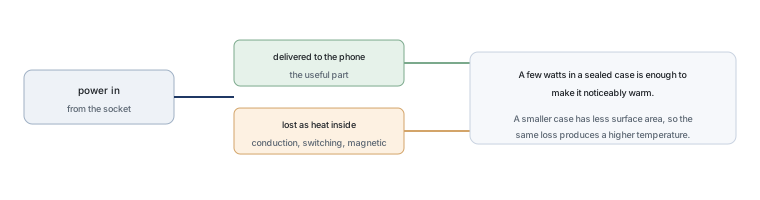 Why Does Your Phone Charger Get Warm?Knowledge
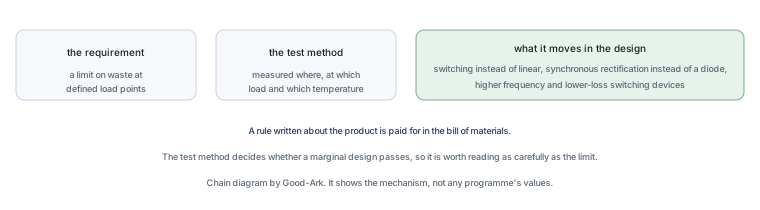 Energy Efficiency Rules Worldwide: How Regulations Shape Component ChoicesKnowledge
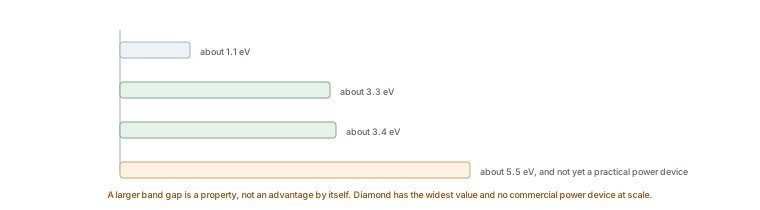 Wide-Bandgap Semiconductors: Adoption Report 2026Knowledge
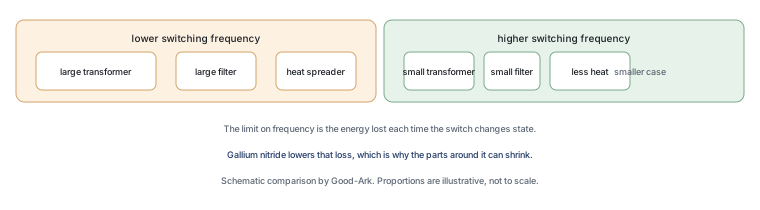 The GaN Charger Market: Why Your Next Adapter Is SmallerKnowledge
 Component Lead Times in 2026: What Is Actually Normal NowKnowledge
 China’s Power Semiconductor Industry: Where It Stands in 2026Knowledge