Good-Ark — discrete power semiconductors: rectifiers, Schottky, TVS, MOSFETs, SiC and IGBT
Request a Quote

What Is the GSMDJ Series Used For? A Beginner-Friendly Explanation
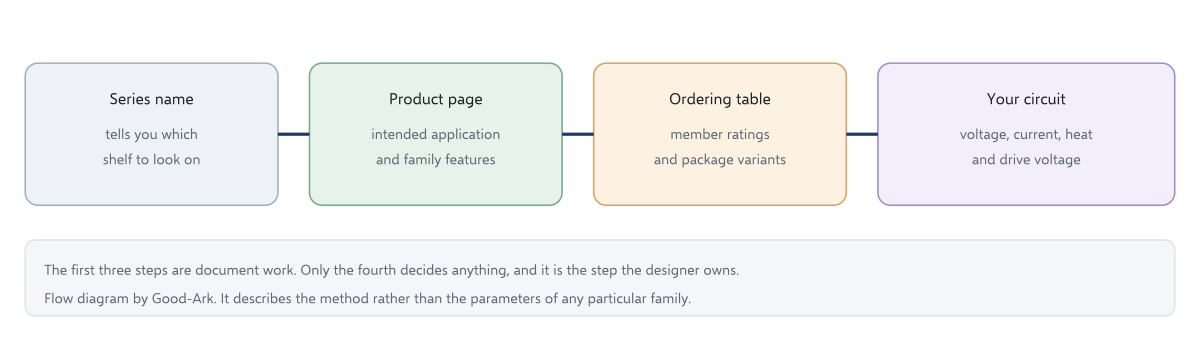
A series code is a shelf label rather than a specification, and the practical question a buyer needs answered is which shelf holds parts that suit their circuit. That answer comes from two documents — the family’s product page and its datasheet — and both are more useful than any summary written about them. The … Read more
AC vs DC Explained: Why Diodes Are the Bridge Between Your Wall Socket and Your Phone

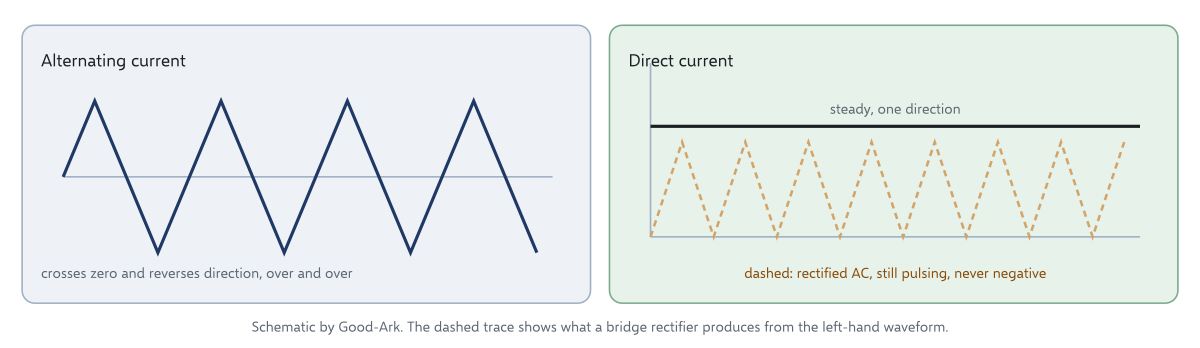
Updated: October 28, 2026 This page is a focused engineering note in the consumer how x works cluster—use the checklists and links below to finish selection, not as a substitute for the datasheet. Topic hub: How a power adapter works. Related deep-dives sit in the continue list at the end. Before release Pass criteria Ratings … Read more

How to Read a Diode Datasheet When You Have Never Read One Before

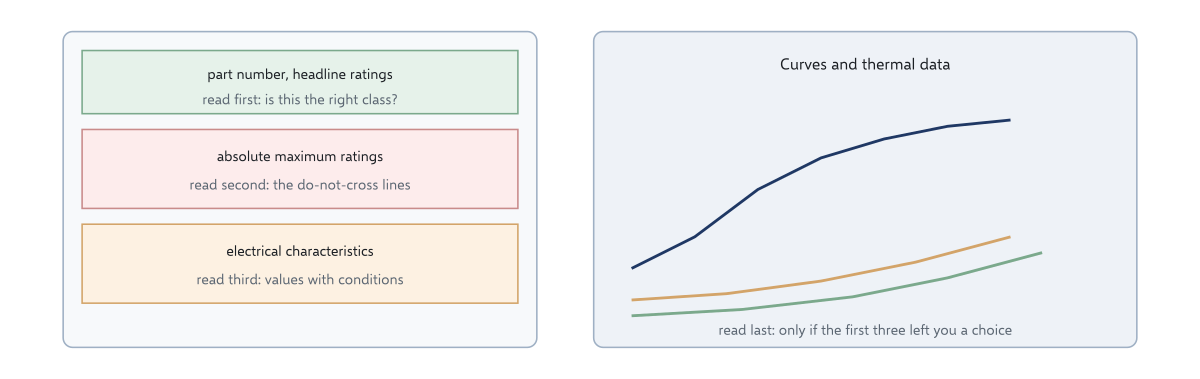
Updated: October 27, 2026 Reading a diode datasheet means extracting absolute maximums, electrical characteristics at stated conditions, curves, and package/thermal data—then mapping them to your voltage, current, frequency, and temperature. See which tables matter first and how test conditions change VF and leakage. Find trustworthy PDFs via Good-Ark datasheets guide; verify channels with counterfeit checks. … Read more

Diode vs Capacitor vs Resistor: What Each Part Actually Does

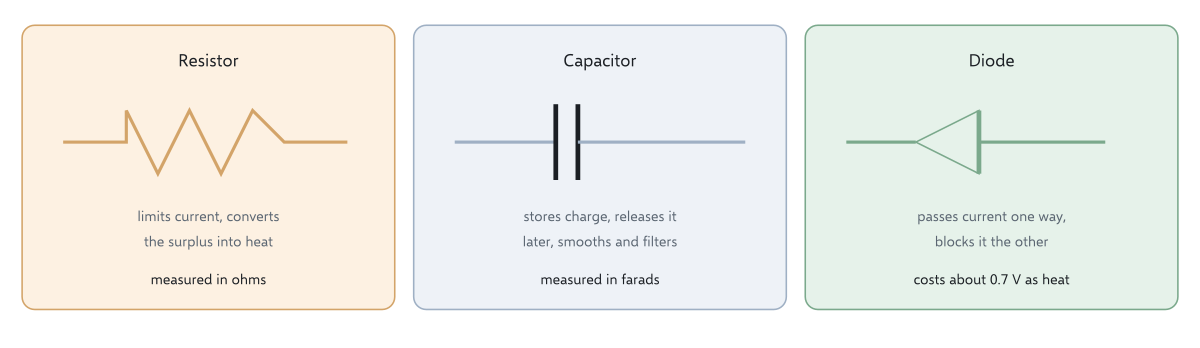
Three components account for most of what a beginner sees on a circuit board, and each does one thing that the other two cannot. A resistor limits current, a capacitor stores charge, and a diode lets current pass one way and not the other. Knowing which is which turns a random scatter of parts into … Read more

Zener Diode for Beginners: Regulating a Voltage Without an IC

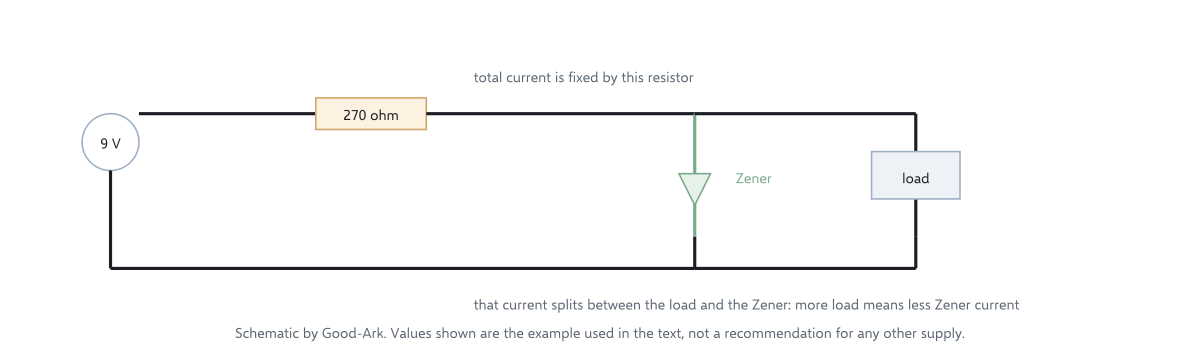
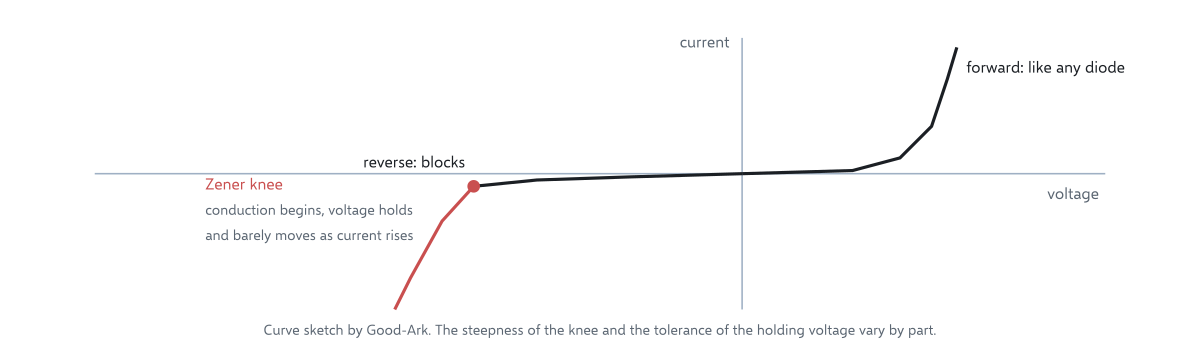
This is the smallest useful voltage regulator you can build: a resistor, a Zener diode, and something to power. It is not accurate and it is not efficient, and it will teach you more about regulation than any explanation, because you can watch the output move as you change the load. What you will build … Read more

Good-Ark Zener Diodes in Plain Language: The Part That Holds a Voltage Steady

Updated: October 27, 2026 Translate brand or logistics pages into checks you can put on a PO: ratings, documents, MOQ, and lead time—not marketing adjectives. Topic Record on the PO Risk if vague MPN + package Full ordering code Wrong die/package Docs Datasheet rev / CoC Silent PCN surprises MOQ / SPQ Reel vs cut-tape … Read more

Why Does a Bridge Rectifier Need Four Diodes?

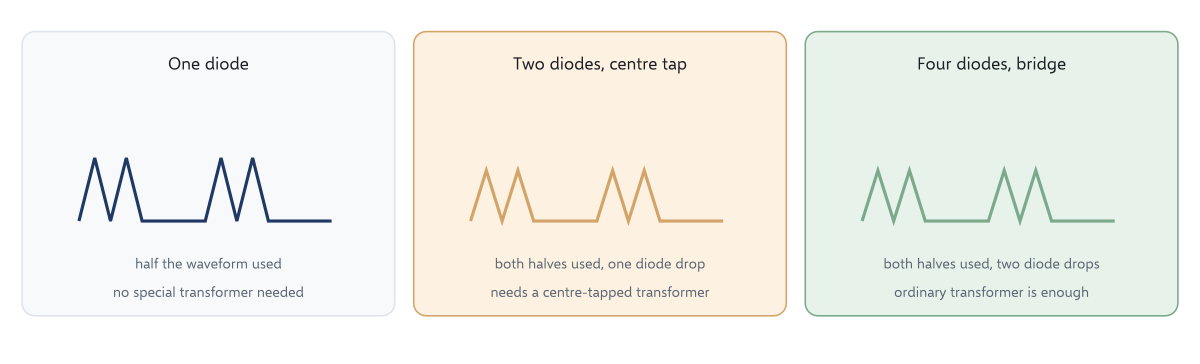
The answer is one sentence long, and the reasoning behind it is the part worth knowing: two diodes give full-wave rectification but only if the transformer has a centre tap, and four diodes achieve the same result with an ordinary transformer. The fourth pair exists to remove a requirement rather than to add a function. … Read more

What Is a Bridge Rectifier? Turning AC Into DC, Explained With Pictures

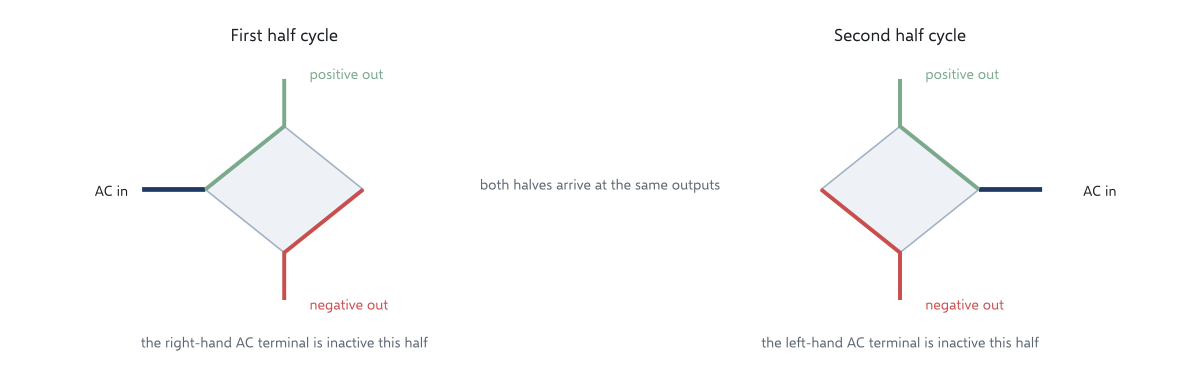
Updated: October 27, 2026 A bridge rectifier is four diodes (or a packaged bridge) arranged to convert AC into a single-polarity DC rail—full-wave using both halves of the AC cycle. Below is a practical definition, the ratings that matter, and where this part sits among related guides: Bridge rectifier guide, 400 Hz Aircraft Ac Rectification … Read more

Schottky vs Normal Diode: Which One Should You Pick?

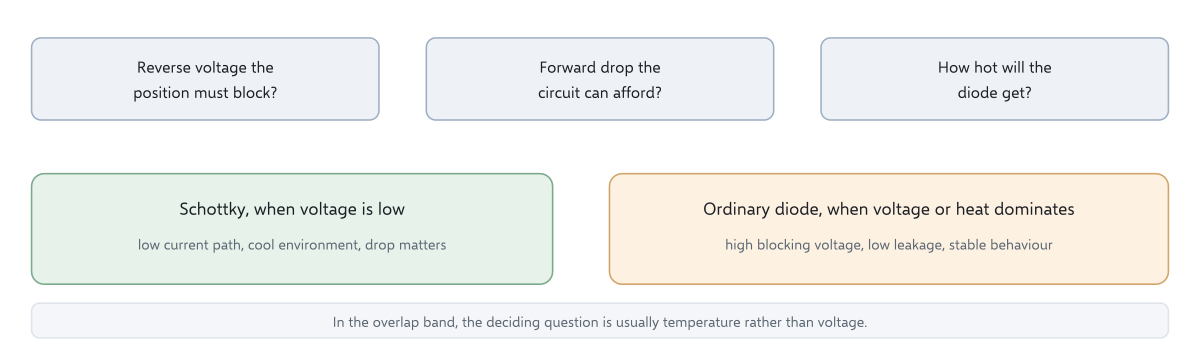
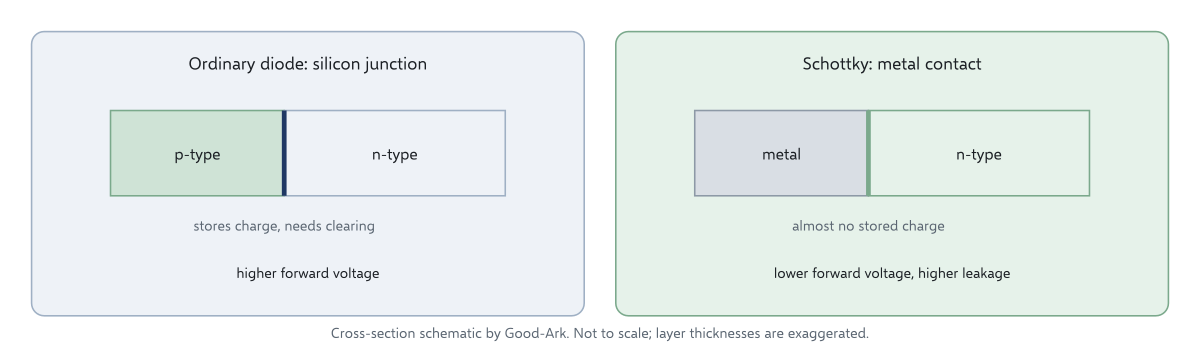
Updated: October 27, 2026 A Schottky diode uses a metal-semiconductor barrier for lower forward drop and faster switching than a typical PN rectifier—at the cost of higher reverse leakage and lower practical reverse-voltage range in many silicon parts. Compare when Schottky wins vs standard/fast PN diodes. Selection depth: Schottky barrier rectifier selection, low VF Schottky, … Read more

Diode Markings Decoded: Reading the Numbers on a Component You Found in a Drawer

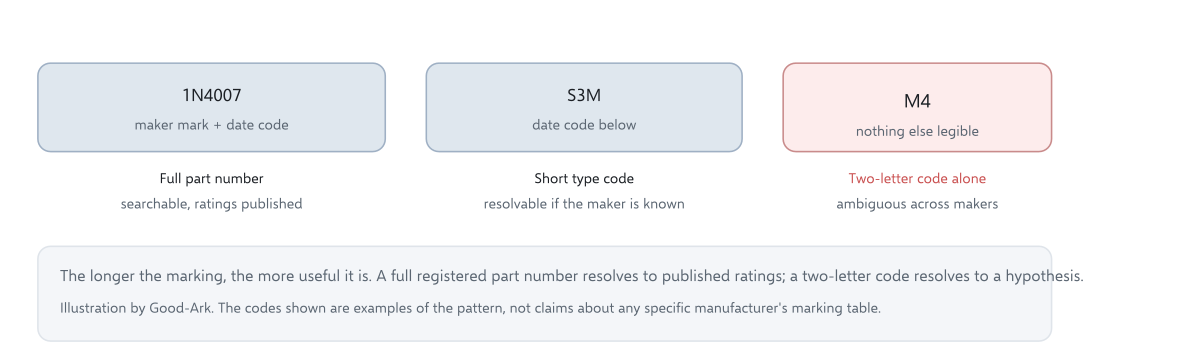
Updated: November 9, 2026 Sooner or later everybody ends up with a handful of loose diodes and no idea what they are. The codes on the body look like they should be enough, and sometimes they are — but the same short code can mean different parts from different manufacturers, which is the trap worth … Read more

How Does a Diode Work? The PN Junction in Plain Language

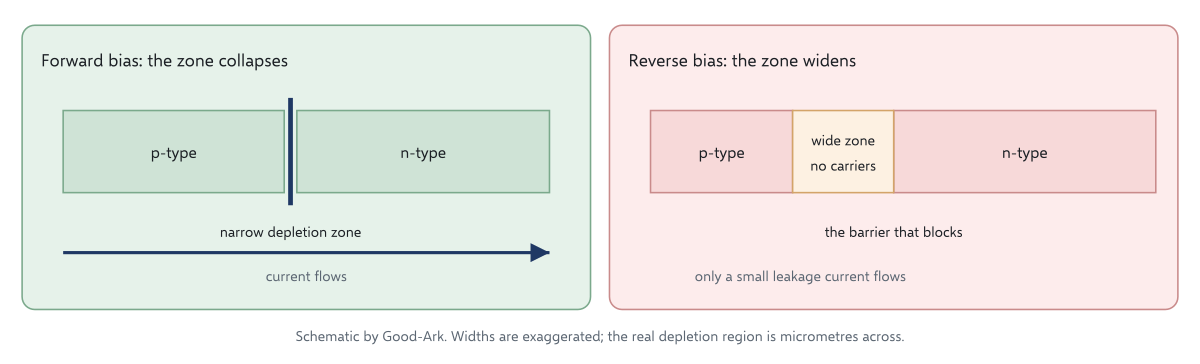
Everything a diode does comes from one thin boundary inside it. The package, the leads and the markings are just delivery; the behaviour lives in a zone a few micrometres wide where two differently treated regions of silicon meet, and understanding that zone makes the rest of the device class predictable rather than mysterious. Two … Read more

Need a part number checked against your design?

Send the topology, current and voltage class. Good-Ark sales and application engineering will confirm the closest device, package and qualification status.

Copyright Suzhou Good-Ark Electronics Co., Ltd. All Rights Reserved