Good-Ark — discrete power semiconductors: rectifiers, Schottky, TVS, MOSFETs, SiC and IGBT
Request a Quote

How Does an Electric Car Charge? AC, DC and What Happens Inside
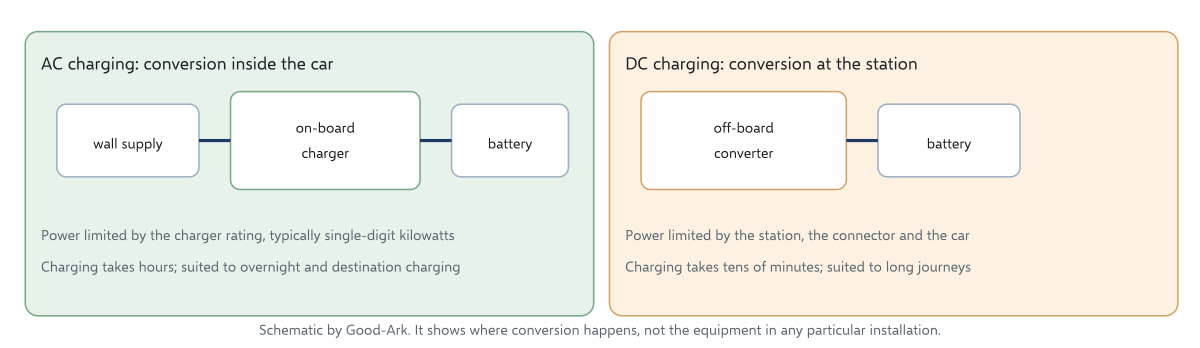
An electric car can be charged in two fundamentally different ways, and the difference is not the shape of the plug. It is where the conversion from alternating to direct current happens: inside the car for one kind of charging, and inside the charging equipment for the other. Two kinds of charging cable Alternating-current charging … Read more
Inside an Electric Car: Where the Power Electronics Sit

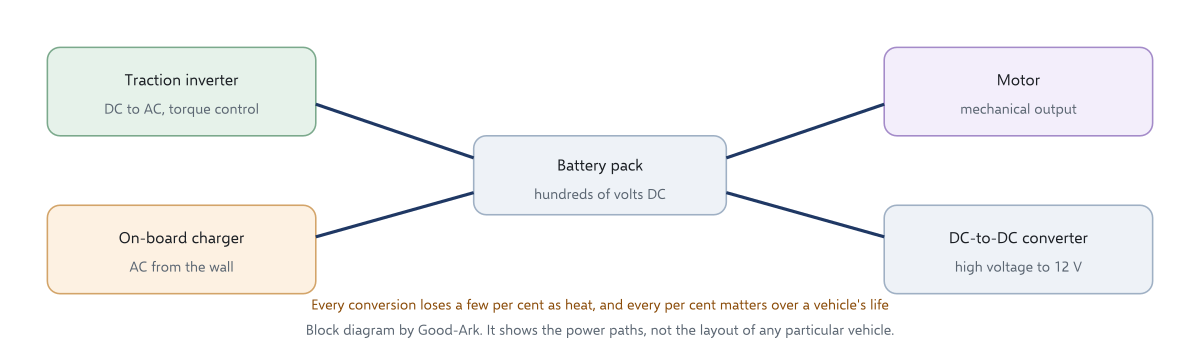
An electric car has three jobs that involve power electronics rather than computing: moving energy from the battery to the motor, moving it from the wall into the battery, and moving a small amount of it from the high-voltage system into the low-voltage one. Those three jobs are performed by five blocks of hardware, and … Read more

How Many Chips Are in a Car? The Quiet Explosion of Automotive Electronics

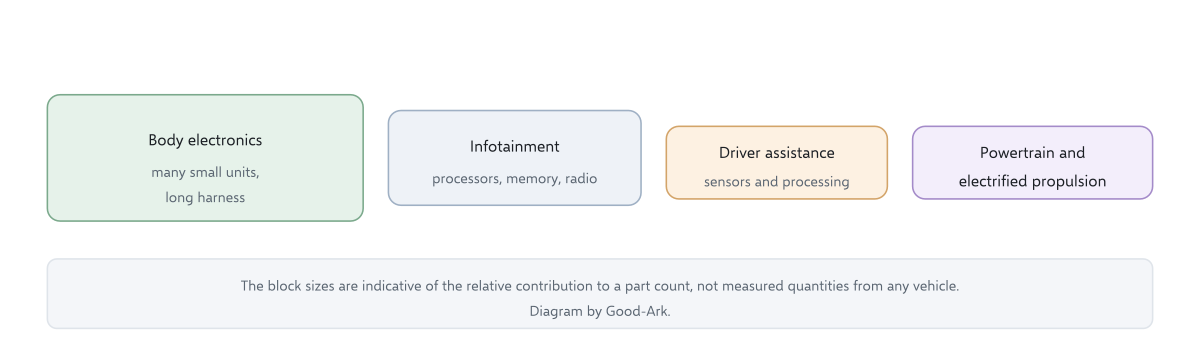
Ask how many chips are in a car and you will find published answers ranging from a few hundred to well over a thousand. The range is not a mistake; it reflects three different definitions, and understanding them is more useful than choosing one number. A short answer with real uncertainty The honest short answer … Read more

What Is the GSD Series Used For? A Plain-Language Guide for Buyers and Beginners

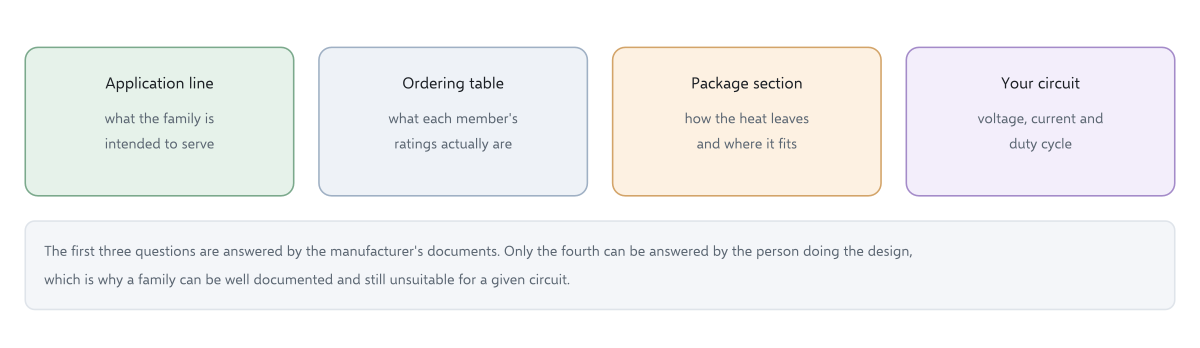
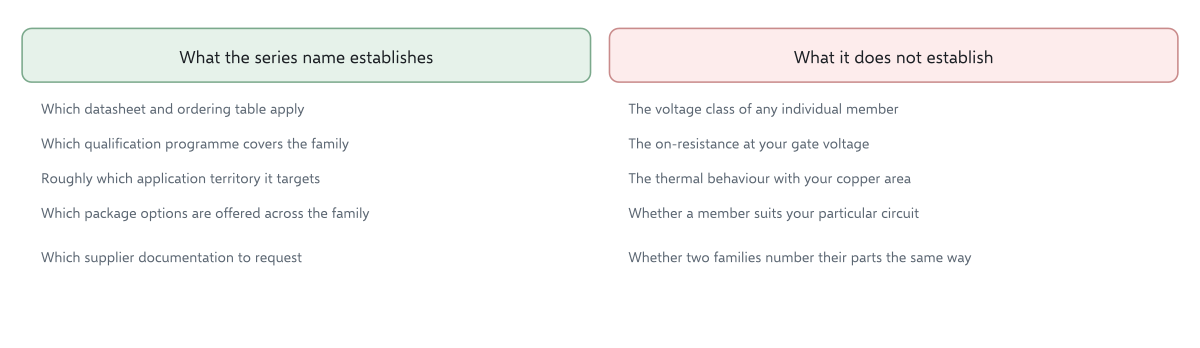
The useful question about any component family is not what its name means but what the parts in it are specified to do. That answer lives in two documents — the family’s product page for its intended application, and its datasheet for the member ratings — and both are more reliable than any summary written … Read more

Good-Ark Automotive Parts in Plain Language: What Actually Goes Into a Car

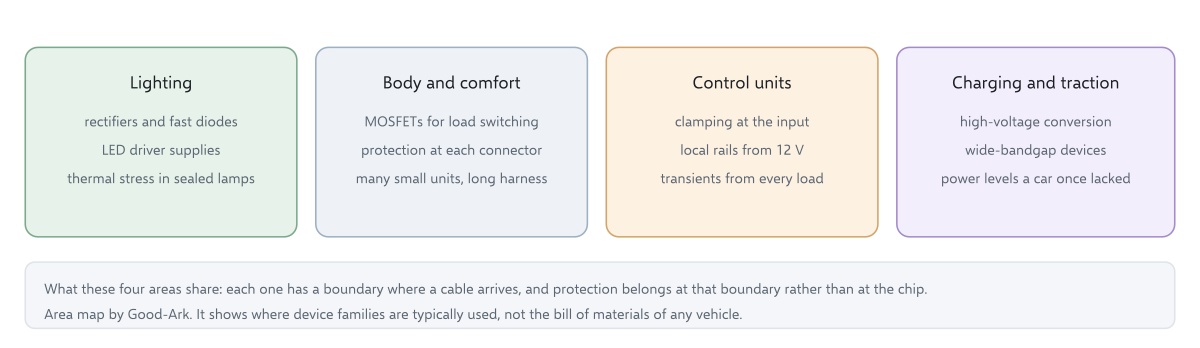
A car is not one electronic product; it is dozens of small ones sharing a wiring harness and an electrical environment that is unusually hostile. Understanding that environment explains why a diode that costs a few cents in a phone costs considerably more in a vehicle, and why the qualification paperwork matters as much as … Read more

Choosing a MOSFET for Your First Project: A Beginner Checklist

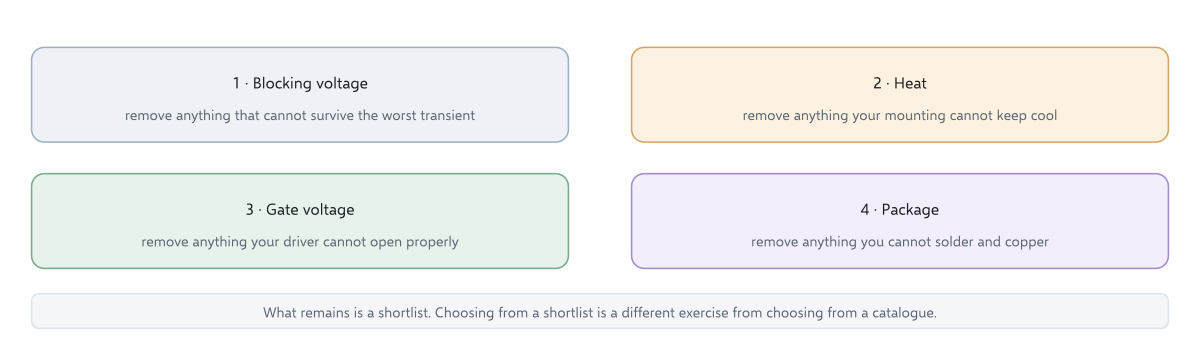
Four questions answer most first-project selections, and three of them are about the circuit rather than the part. Answer those before opening a catalogue and the choice usually narrows to a handful of candidates that are all capable of doing the job. Four questions before you open a catalogue What voltage must the device block, … Read more

Why Do MOSFETs Get Hot? On-Resistance Explained Without the Maths

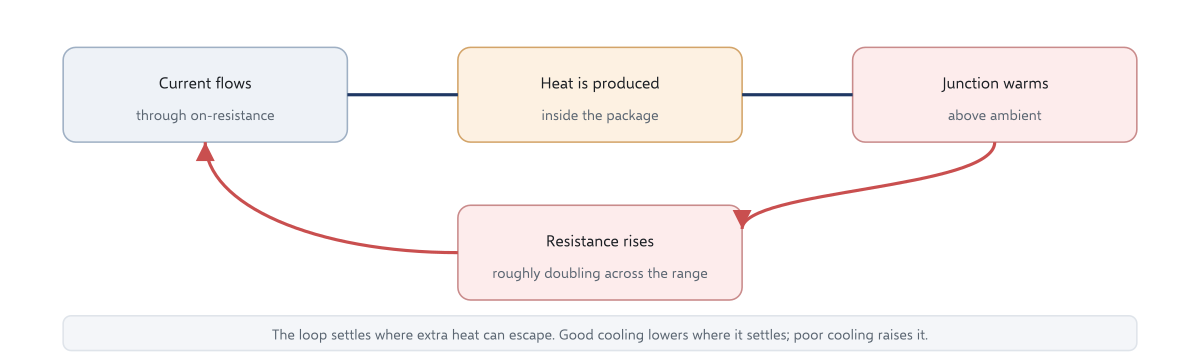
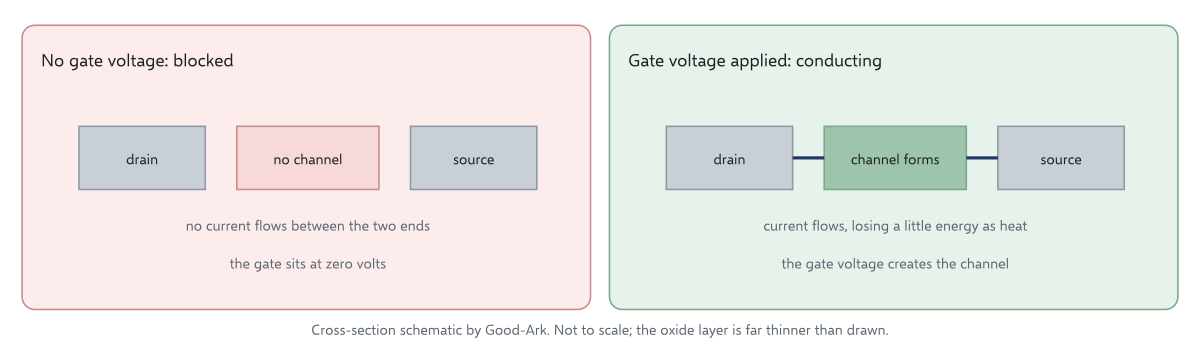
A MOSFET does not get hot because it is faulty. It gets hot because it is a resistance while it conducts and a lossy transition while it switches, and both of those produce heat in proportion to the current you push through it. The interesting part is that the heating tends to accelerate itself. A … Read more

GSD Series, GSMDJ Series and Their Cousins: A Beginner’s Map of Good-Ark MOSFET Families

Updated: October 27, 2026 Use a MOSFET series map to jump from voltage/current/package needs to a shortlist—then finish with RDS(on), gate charge, and SOA at your thermal limit. A map is navigation, not a substitute for the datasheet. Selection depth: power MOSFET selection guide, N-channel vs P-channel. Map axis Shortlist filter Next measurement VDS Rail … Read more

MOSFET vs Relay: Which Switch Should Your Project Use?

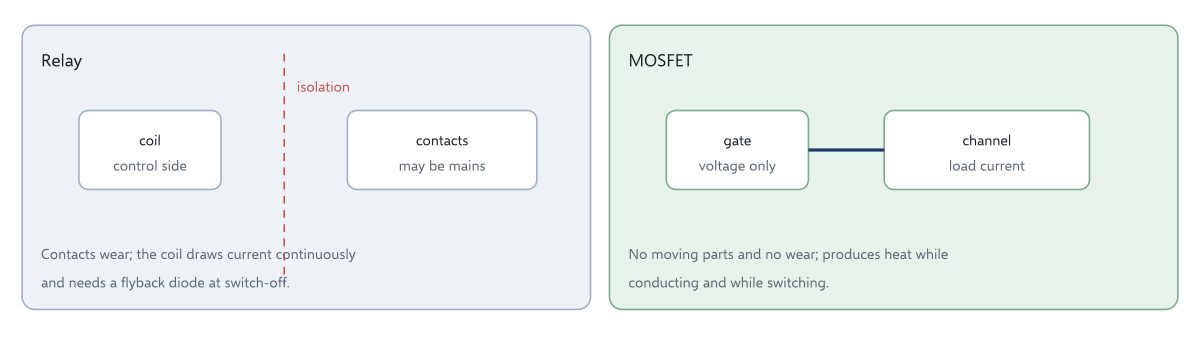
The choice between a relay and a MOSFET usually comes down to one question that has nothing to do with performance: does the load need to be electrically isolated from your control circuit? Where it does, the relay wins outright. Where it does not, the MOSFET usually wins on everything else. Two ways to switch … Read more

The Diode Part Numbers Everyone Eventually Meets: 1N4007, 1N4148, SS14 and Friends

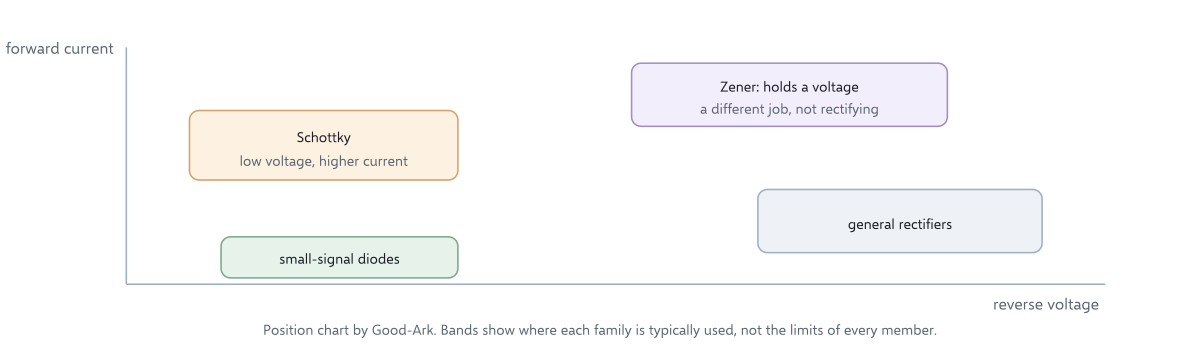
Updated: October 27, 2026 Common diode part numbers are starting points—always confirm with the datasheet; markings collide across eras and vendors. Related reading: how to read a diode datasheet, datasheet terms explained, why not to trust every datasheet. Item Verify Typical trap Conditions Tj, IF, VR columns Comparing numbers at different conditions Curves vs tables … Read more

What Does the GS Prefix Mean? Decoding MOSFET Part Numbers Without Guessing

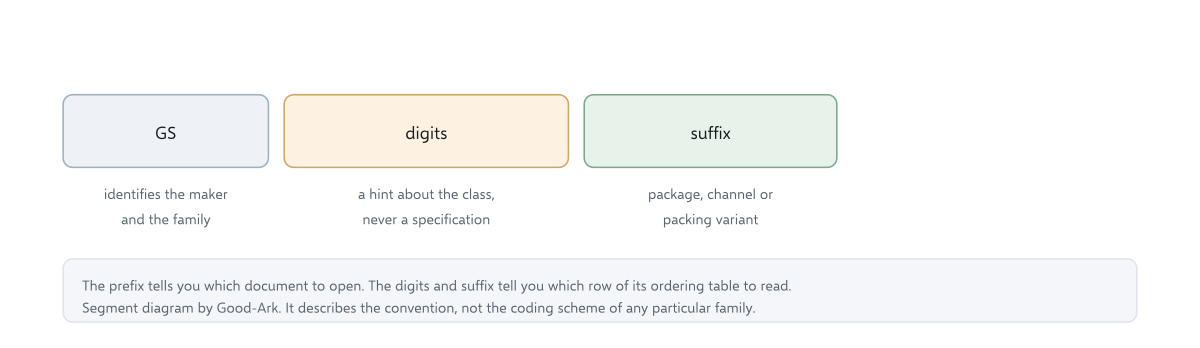
The letters at the start of a component part number almost always identify the manufacturer or the product family, and they carry no rating information at all. Everything useful sits later in the string, and the only reliable way to read it is the ordering table in the current datasheet for that specific family. Why … Read more

Need a part number checked against your design?

Send the topology, current and voltage class. Good-Ark sales and application engineering will confirm the closest device, package and qualification status.

Copyright Suzhou Good-Ark Electronics Co., Ltd. All Rights Reserved