Good-Ark — discrete power semiconductors: rectifiers, Schottky, TVS, MOSFETs, SiC and IGBT
Request a Quote
Good-Ark Engineering Blog

Articles

Browse Good-Ark engineering articles by rectifiers, protection, automotive, MOSFET, SiC, solar, Schottky, power supply, bridge, Zener, and sourcing topics.

Suzhou Good-Ark Electronics — discrete power semiconductor manufacturer

GSD Series, GSMDJ Series and Their Cousins: A Beginner’s Map of Good-Ark MOSFET Families
Updated: October 27, 2026 Use a MOSFET series map to jump from voltage/current/package needs to a shortlist—then finish with RDS(on), gate charge, and SOA at your thermal limit. A map is navigation, not a substitute for the datasheet. Selection depth: power MOSFET selection guide, N-channel vs P-channel. Map axis Shortlist filter Next measurement VDS Rail … Read more
MOSFET vs Relay: Which Switch Should Your Project Use?

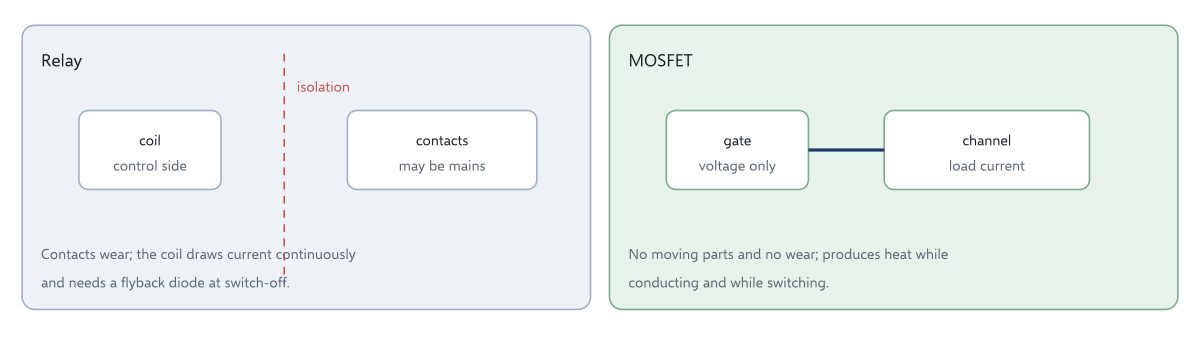
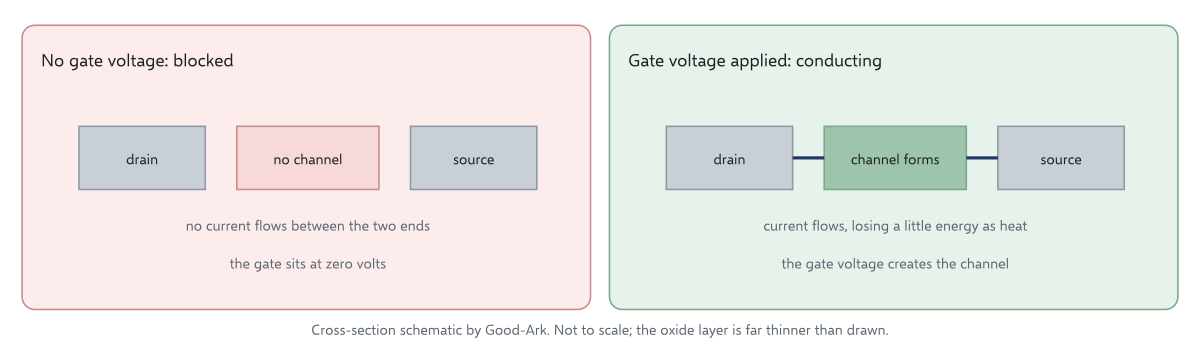
The MOSFET versus relay choice often ends on one question that is not a performance number: does the load have to be electrically isolated from the control circuit? Where that isolation is required, a relay remains the switch that provides it. Where it is not, the next numbers that decide the design are dissipation and … Read more

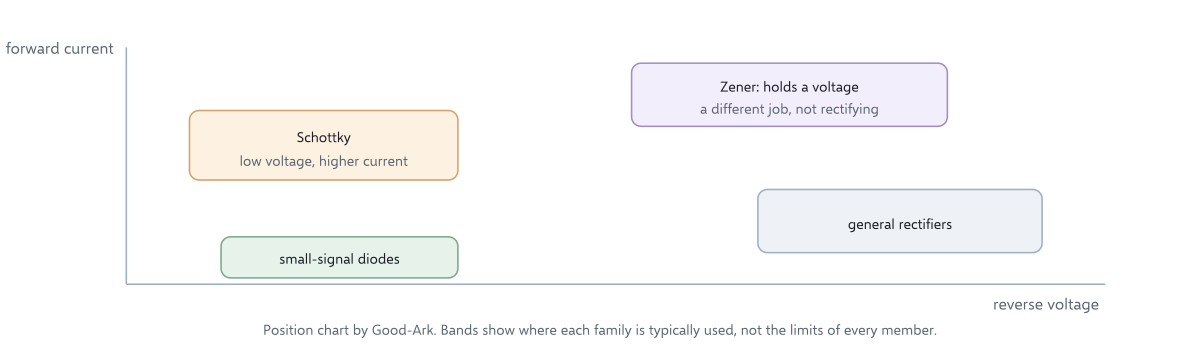
The Diode Part Numbers Everyone Eventually Meets: 1N4007, 1N4148, SS14 and Friends

Updated: October 27, 2026 Common diode part numbers are starting points—always confirm with the datasheet; markings collide across eras and vendors. Related reading: how to read a diode datasheet, datasheet terms explained, why not to trust every datasheet. Item Verify Typical trap Conditions Tj, IF, VR columns Comparing numbers at different conditions Curves vs tables … Read more

What Does the GS Prefix Mean? Decoding MOSFET Part Numbers Without Guessing

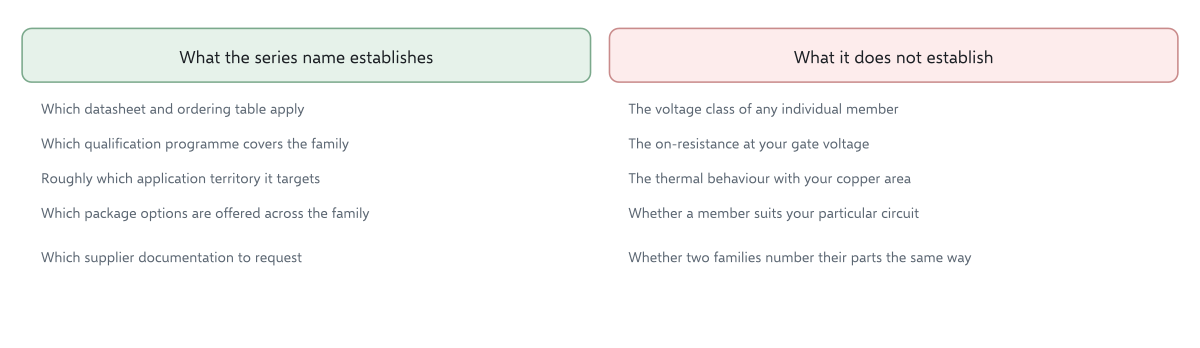
The letters at the start of a component part number almost always identify the manufacturer or the product family, and they carry no rating information at all. Everything useful sits later in the string, and the only reliable way to read it is the ordering table in the current datasheet for that specific family. Why … Read more

What Is the GSMDJ Series Used For? A Beginner-Friendly Explanation

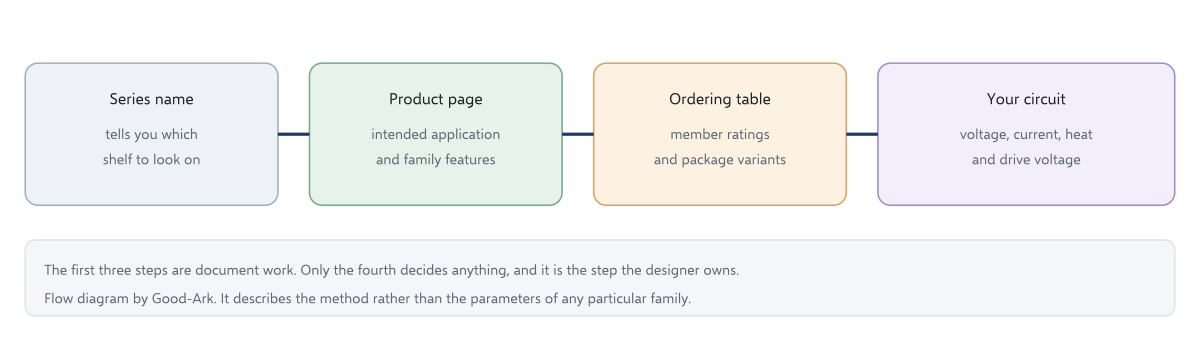
A series code is a shelf label rather than a specification, and the practical question a buyer needs answered is which shelf holds parts that suit their circuit. That answer comes from two documents — the family’s product page and its datasheet — and both are more useful than any summary written about them. The … Read more

PV Bypass Diode Failures in the Field: Hot Spots and Thermal Stress

PV bypass diode failures appear as string underperformance or a damaged junction box, and the evidence chain runs from the shading pattern to the junction-box temperature. This guide covers the failure mechanisms, the hot-spot damage patterns, the thermal evidence, and the module-versus-device attribution. Why Bypass Diodes Fail in the Field The bypass diode conducts the … Read more

How to Select a PV Bypass Diode: VF, Leakage, Surge, and the Junction Box

A PV bypass diode is selected by five numbers—forward current, forward drop, leakage at temperature, surge capability, and thermal resistance—and the selection only works when those numbers are checked inside the real junction-box heat-flow route. The part that looks best at 25 °C often fails the hot, shaded-hour test. This guide walks through the selection … Read more

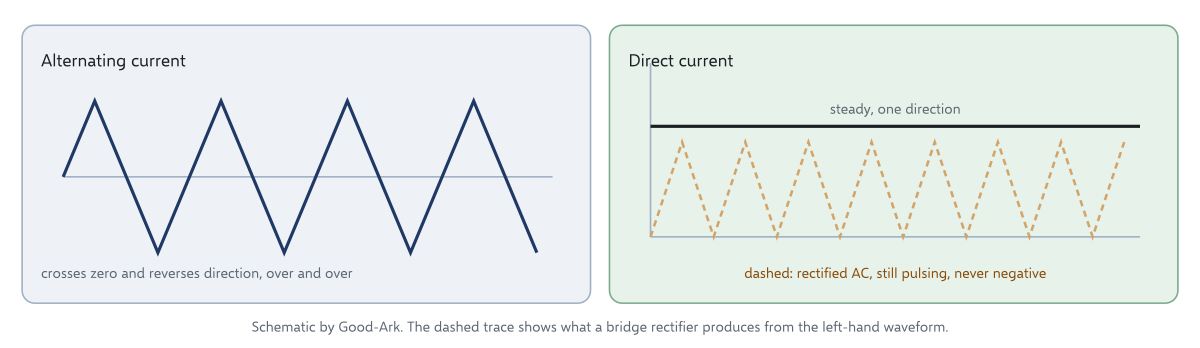
AC vs DC Explained: Why Diodes Are the Bridge Between Your Wall Socket and Your Phone

Updated: October 28, 2026 This page is a focused engineering note in the consumer how x works cluster—use the checklists and links below to finish selection, not as a substitute for the datasheet. Topic hub: How a power adapter works. Related deep-dives sit in the continue list at the end. Before release Pass criteria Ratings … Read more

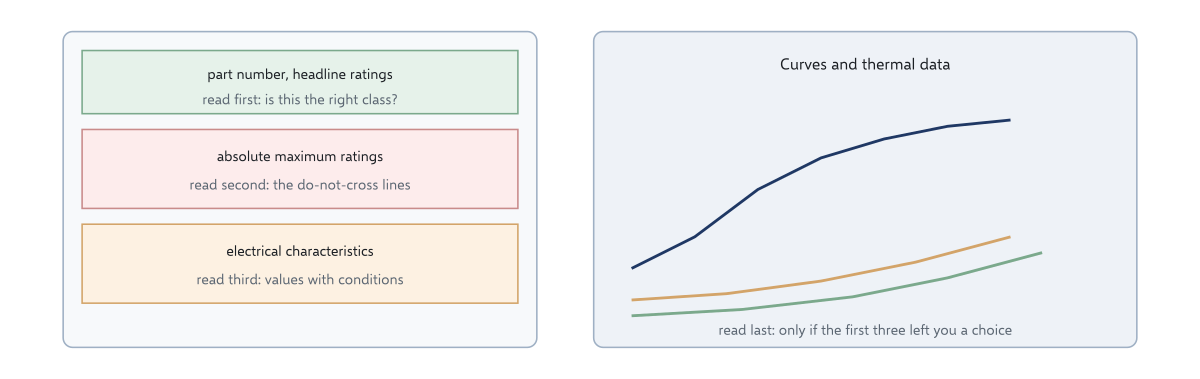
How to Read a Diode Datasheet When You Have Never Read One Before

Updated: October 27, 2026 Reading a diode datasheet means extracting absolute maximums, electrical characteristics at stated conditions, curves, and package/thermal data—then mapping them to your voltage, current, frequency, and temperature. See which tables matter first and how test conditions change VF and leakage. Find trustworthy PDFs via Good-Ark datasheets guide; verify channels with counterfeit checks. … Read more

Diode vs Capacitor vs Resistor: What Each Part Actually Does

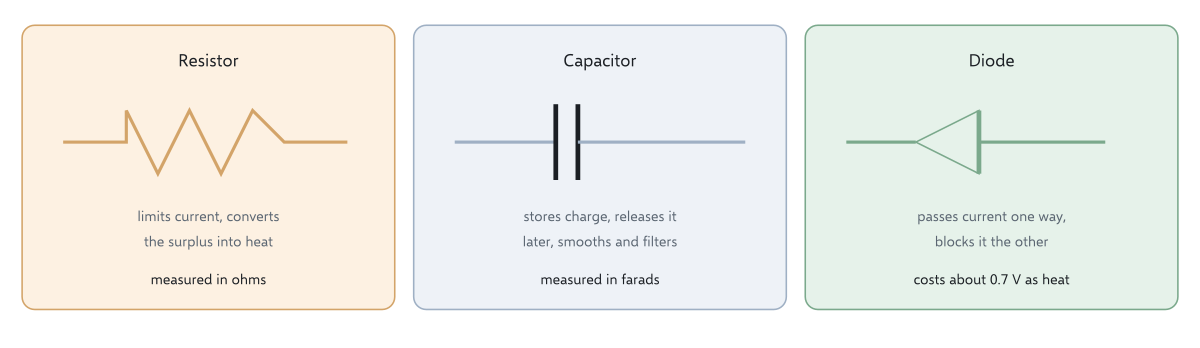
Three components account for most of what a beginner sees on a circuit board, and each does one thing that the other two cannot. A resistor limits current, a capacitor stores charge, and a diode lets current pass one way and not the other. Knowing which is which turns a random scatter of parts into … Read more

Zener Diode for Beginners: Regulating a Voltage Without an IC

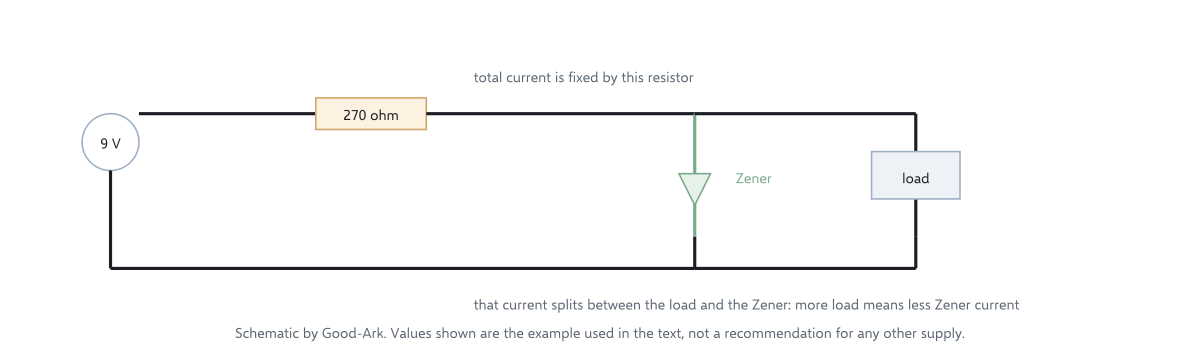
This is the smallest useful voltage regulator you can build: a resistor, a Zener diode, and something to power. It is not accurate and it is not efficient, and it will teach you more about regulation than any explanation, because you can watch the output move as you change the load. What you will build … Read more

Need a part number checked against your design?

Send the topology, current and voltage class. Good-Ark sales and application engineering will confirm the closest device, package and qualification status.

Copyright Suzhou Good-Ark Electronics Co., Ltd. All Rights Reserved