AWSS5H100: 5 A, 100 V Schottky for Automotive Lighting Modules
AWSS5H100 appears in the Good-Ark new-release table as a 5 A, 100 V Schottky rectifier in eSGC (TO-277). The selection question is…
AWSS5H100 appears in the Good-Ark new-release table as a 5 A, 100 V Schottky rectifier in eSGC (TO-277). The selection question is whether the higher reverse-voltage class is needed while the current requirement remains in the 5 A class. Increasing the voltage label alone does not settle the choice.
Last updated:
Establish why the 100 V class is being considered
Write down the reverse-voltage requirement before comparing parts. Distinguish a sustained voltage, a repetitive switching peak and a fault transient. Their durations and current paths matter; a single maximum reading without the circuit context can hide the real stress.
A 100 V rectifier label does not specify the clamping voltage of an upstream TVS, and it does not authorize avalanche operation. Establish the protected voltage at this diode and use explicit applicable limits. Do not infer reverse-energy capability from the part name.
Keep the current comparison in the 5 A class
AWSS5H60 is the same current-class entry in the published family table. Moving to AWSS5H100 raises the reverse-voltage label, but the table does not establish the forward-drop or leakage difference at the intended operating point. Obtain both curves rather than assigning an assumed efficiency penalty or benefit.
If the circuit also needs a different current capability, that is a second comparison. AWSS10H100 changes the current class as well; the loss, thermal and surge assessment must follow the new exact device instead of being carried over automatically.
Review the interaction with the protection network
Trace the surge current return, series impedance and any clamp located before the rectifier. Check whether the diode sees the source transient, a clamped waveform, or an inductive overshoot created locally. Document those conditions alongside the chosen reverse-voltage margin.
For continuous conduction, estimate forward loss using data at the relevant temperature. Treat reverse leakage during blocking intervals separately. The AWSS family guide provides the common comparison; this page focuses on the reason for moving from the 60 V to the 100 V class.
Obtain the exact model documents
Use the AWSS5H100 product page to locate the manufacturer entry. Obtain the current datasheet revision and resolve any missing operating, thermal, surge or qualification limit before approving the part.
Continue through this engineering topic
For the complete selection, design, verification, and troubleshooting path, explore the Automotive Power Electronics Hub.
- Practical guide: The AWSS Family: Matching 5/10 A and 60/100 V Parts to Your Automotive Load
- Practical guide: T-BOX Power Design: Quiescent Current and Wake-Up Bursts in Telematics
- Practical guide: AWSS10H100: A 10 A, 100 V Schottky for ECU and Lighting Power
- Ask Good-Ark technical support about this application
Recommended
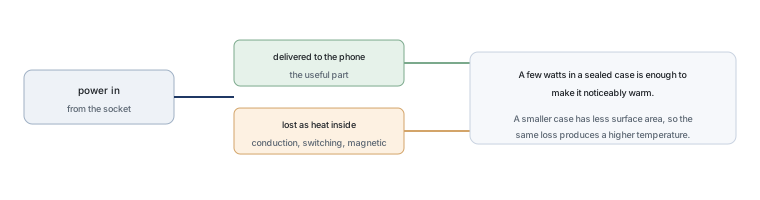 Why Does Your Phone Charger Get Warm?Knowledge
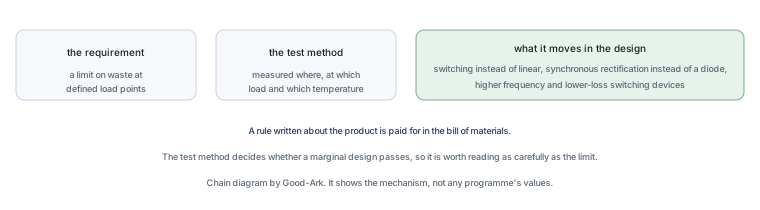 Energy Efficiency Rules Worldwide: How Regulations Shape Component ChoicesKnowledge
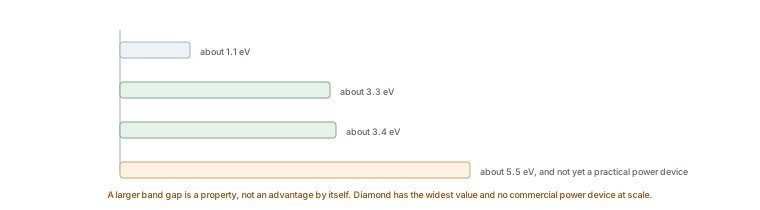 Wide-Bandgap Semiconductors: Adoption Report 2026Knowledge
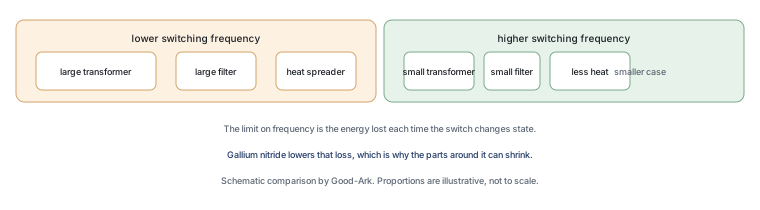 The GaN Charger Market: Why Your Next Adapter Is SmallerKnowledge
 Component Lead Times in 2026: What Is Actually Normal NowKnowledge
 China’s Power Semiconductor Industry: Where It Stands in 2026Knowledge