electronica Visitor Guide: How to Plan a Productive Semiconductor Sourcing Visit
electronica is a major meeting point for the global electronics industry, bringing together component manufacturers, system designers, distributors, buyers, engineers, and technology…

electronica is a major meeting point for the global electronics industry, bringing together component manufacturers, system designers, distributors, buyers, engineers, and technology decision-makers. For visitors evaluating semiconductor suppliers, the event can be a practical setting to compare product categories, discuss documentation needs, review package options, and begin technical conversations for future projects.
Key Takeaways
- electronica is a major meeting point for the global electronics industry, bringing together component manufacturers, system designers, distributors, buyers, engineers, and technology decision-makers.
- Before you finalize the BOM, compare the related options: electronica Visitor Guide and Good-Ark Semiconductor.
- Confirm the part against the latest official datasheet before production release.
A productive visit requires more than walking the exhibition halls. Build a focused plan around your application requirements, supplier shortlist, and the questions that must be answered before a component can move into design validation or purchasing review.
Why Visit electronica?
electronica covers a broad electronics ecosystem, including semiconductor and microsystem technologies, sensors, test and measurement, display technologies, automotive electronics, embedded systems, power electronics, and electronic manufacturing solutions. It offers visitors an opportunity to meet suppliers directly and see how component technologies align with changing design and sourcing priorities.
For semiconductor buyers and engineers, the most useful value often comes from combining product discovery with supplier evaluation. A short booth discussion can help clarify whether a supplier’s portfolio may support the electrical, mechanical, documentation, and qualification requirements of a target program.
Visitors may use the event to:
-
Compare component categories for power conversion, protection, rectification, sensing, and control applications.
-
Review package options and board-space considerations with technical teams.
-
Discuss documentation availability before initiating a component approval process.
-
Identify products that may be relevant to SMPS, photovoltaic inverter, automotive lighting, EPS, industrial equipment, and consumer-electronics applications.
-
Meet supplier representatives before requesting samples, quotations, or technical documents.
-
Attend forums and technical sessions that provide context on electronics-market developments and emerging application requirements.
electronica also attracts an international audience. The organizer reports visitors from more than 100 countries and regions, which can make the fair useful for companies building cross-border sourcing relationships and evaluating global supply options.
Prepare Before You Travel
The most successful visitor schedules begin several weeks before the event. Rather than treating the fair as a general networking opportunity, define the technical and purchasing objectives that matter to your business.
Create a supplier shortlist. Start with companies relevant to your component category and application. Review their official websites, product pages, quality information, documentation resources, and application materials. Focus on suppliers that can provide clear product information and responsive technical communication.
Define the project requirement. Bring a concise summary of the design or sourcing need. This may include the intended application, target electrical characteristics, package preferences, expected operating environment, annual demand estimate, regulatory requirements, and timeline for design validation.
Separate exploration from qualification. A trade-fair conversation can identify a potential supplier, but it should not replace engineering validation or quality review. Use the event to determine whether further evaluation is justified, then continue with formal documentation, samples, testing, and approval procedures after the event.
Book priority meetings. If a supplier is strategically important, arrange a meeting in advance. Trade-show booths can become busy, especially during peak hours. A scheduled discussion gives both teams more time to review technical questions and agree on next steps.
Prepare a question list. Visitors often lose valuable time when they ask only broad questions such as “What products do you make?” Instead, prepare focused questions about product families, packages, documentation, quality processes, sample availability, application experience, and technical support.
What to Ask Semiconductor Suppliers
A well-structured conversation helps visitors compare suppliers more effectively. The objective is not to collect the largest number of brochures; it is to identify suppliers that can communicate clearly and support a realistic qualification path.
Consider asking the following questions:
-
Which product families are most relevant to my application?
-
Which package options are available for the products under consideration?
-
Where can I access datasheets, package drawings, and other technical documents?
-
Can the supplier provide application guidance for power-management or protection designs?
-
What documentation can be shared for qualification and compliance review?
-
How should samples be requested, and what availability, cost, and lead-time considerations may apply?
-
What information does the supplier need to recommend an appropriate component?
-
Who will be the technical and commercial contact after the event?
-
What verification steps are recommended before project approval?
-
Can the supplier support communication during prototype testing and purchasing evaluation?
Do not rely on verbal claims alone when making an engineering or procurement decision. Confirm package, electrical characteristics, qualification requirements, and compliance documents before project approval. Device and system compatibility depends on circuit design, operating conditions, qualification requirements, thermal design, and regional compliance needs.
A Practical Booth-Visit Workflow
A structured workflow can help visitors use limited exhibition time efficiently.
Bring a notebook or digital template to record each supplier discussion consistently. Capture the contact name, relevant product family, requested documents, open technical questions, and agreed follow-up date. This avoids confusion after returning from a busy multi-day event.
For example, an engineer evaluating a power-supply design may identify several rectification or protection options at the fair. The next stage should include reviewing datasheets, confirming the package footprint, checking thermal and electrical design requirements, and determining whether the proposed part fits the system’s intended conditions. A booth conversation is the starting point, not the final approval.
Planning Your Hall Schedule
Large trade fairs can involve extensive walking and dozens of potential meetings. Divide your schedule into priority levels:
-
Priority one: Suppliers already under consideration for current designs, approved-vendor reviews, or upcoming sourcing projects.
-
Priority two: Suppliers that may offer relevant alternatives, complementary product categories, or future design options.
-
Priority three: Technology areas, forums, and exhibitors for market research and long-term planning.
Leave time between meetings. Booth visits often run longer than expected when technical questions arise, and travel between halls can affect the schedule. A realistic plan usually allows time for unexpected conversations, meals, note-taking, and revisiting high-priority exhibitors.
Use the official event website before departure to confirm current registration requirements, venue details, opening hours, hall maps, exhibitor information, and conference programming. Event logistics may change, so visitors should rely on organizer information rather than older third-party travel guides.
Semiconductor Evaluation Priorities
When reviewing semiconductor suppliers at electronica, look beyond broad product descriptions. Procurement and engineering teams should focus on the evidence needed to support a responsible component decision.
Technical documentation. Datasheets, package outlines, application notes, and related product documents are essential starting points. Documentation should be reviewed against the actual circuit and system requirements, not just against a general product description.
Package fit. Package selection affects board layout, assembly processes, creepage and clearance considerations, thermal performance, and mechanical constraints. Confirm that package dimensions and land-pattern requirements match the intended design before advancing a part.
Quality and qualification review. The required level of qualification depends on the market, application, customer requirements, operating environment, and relevant regulations. Ask for applicable documentation and have the appropriate internal engineering and quality teams review it before making compliance claims.
Supplier communication. A supplier’s ability to answer focused technical and commercial questions matters. Clear communication during the early evaluation stage can reduce delays when a project moves into prototype validation or production planning.
Application context. A component that appears suitable in one application may not be appropriate for another. Application fit depends on circuit design, operating conditions, package selection, thermal design, qualification requirements, and regional compliance needs.
Meet Good-Ark at electronica
For visitors exploring semiconductor component options, Good-Ark provides product, application, documentation, and company resources through its official English website. Before arranging a discussion, review the available product categories and prepare application-specific questions for the supplier team.
Good-Ark’s online resources can help visitors begin their evaluation by reviewing product information, package references, application topics, and company quality materials. Request the appropriate documents and confirm current product availability before selecting a device for a project.
Visitors can explore:
-
Products for available product categories.
-
New Release for recently featured product information.
-
Featured Parts for highlighted component resources.
-
Package & Outline Dimensions for package-reference information.
-
Documents for available technical documentation.
-
Applications for application-oriented information.
-
Quality for company quality resources.
-
Qualification Certificates for available certificate information.
-
Contact Us to request product, documentation, or meeting information.
Ask Good-Ark to confirm available options and documentation before project approval. Confirm package, electrical characteristics, certification documents, and application fit before ordering.
Key Industry Insight
For semiconductor procurement, the highest-value trade-show outcome is often not an immediate purchasing decision. It is a better-defined supplier evaluation plan.
A useful plan identifies the specific product family to review, the documents needed for technical assessment, the package constraints that affect PCB and assembly design, the qualification questions that require confirmation, and the internal stakeholders responsible for approval. This approach helps engineering and purchasing teams move from an informal conversation to a documented comparison process.
Good sourcing decisions depend on documented requirements, clear supplier communication, package compatibility, technical validation, and application-specific review.
Visitor Checklist
Before attending electronica, prepare the following:
-
Registration confirmation and official event details.
-
A prioritized exhibitor list and hall schedule.
-
A short application or sourcing brief for supplier discussions.
-
Questions about product categories, packages, documentation, and qualification.
-
A method for recording booth notes and follow-up actions.
-
Business cards or digital contact details.
-
Internal approval criteria for samples, technical review, and supplier evaluation.
-
A post-event timeline for document review, technical validation, and purchasing follow-up.
After the event, organize all contacts and materials within a few days. Categorize suppliers by project priority, send concise follow-up messages, request only the documents needed for the next decision stage, and assign clear internal owners for engineering, quality, and procurement actions.
FAQ
What is electronica?
electronica is an international trade fair for the electronics industry. It brings together suppliers, engineers, buyers, developers, and other industry professionals across a wide range of electronics technologies and applications.
Who should visit electronica?
The event can be relevant for design engineers, procurement professionals, quality teams, product managers, electronics manufacturers, distributors, researchers, and business-development teams looking to evaluate technologies or meet potential suppliers.
How can I use electronica for semiconductor sourcing?
Create a supplier shortlist, prepare an application brief, schedule high-priority meetings, ask focused questions about products and documentation, and follow up with formal technical and commercial evaluation after the event.
Can a trade-show meeting replace component qualification?
No. A booth meeting can help identify potential component options and suppliers, but qualification should include the appropriate documentation review, engineering analysis, prototype testing, quality assessment, and application-specific approval process.
What information should I bring to a supplier meeting?
Bring a summary of the intended application, relevant electrical and mechanical requirements, package preferences, operating conditions, target market considerations, development timeline, and questions about documentation or support.
What should I confirm before ordering a semiconductor component?
Confirm electrical characteristics, package fit, qualification requirements, compliance documents, availability, purchasing terms, and application fit before ordering. Requirements vary by circuit, operating conditions, manufacturing process, customer expectations, and regional regulations.
How can I contact Good-Ark after the event?
Use the Contact Us page to submit product, documentation, application, or meeting inquiries through the official website.
Related Products, Services, or Resources
References
- electronica – Exhibitor Directory, Brands, Products and Services
- GlobeNewswire – Empower Semiconductor Showcases Vertical Power Architecture at electronica 2024
- Semiconductor Engineering – Power Semis Usher in the Silicon Carbide Era
- Yole Group – Power SiC Enters the AI Age (Power SiC 2026 report)
- Power Electronics News – Modern Telecom and Data-Center SMPS Powered by Si, SiC and GaN
Recommended
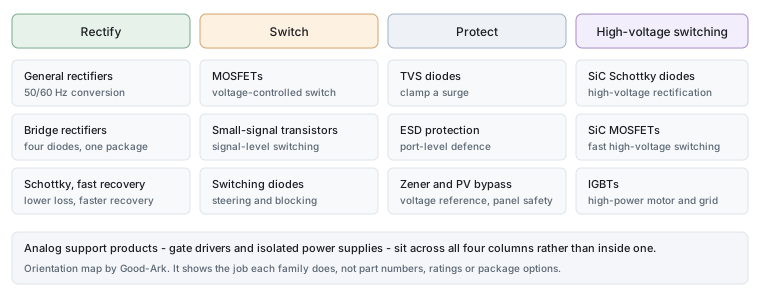 What Does Good-Ark Electronics Actually Make? A Beginner’s Look at the Product LineKnowledge
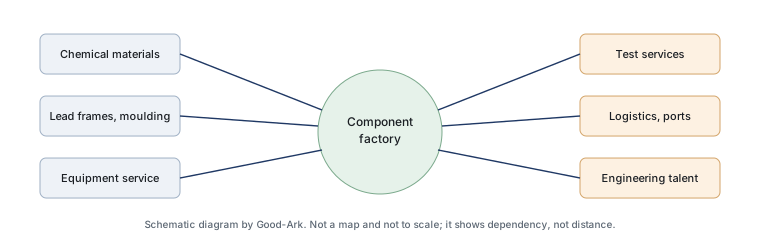 Suzhou Good-Ark: Why a Component Maker’s Home City Matters More Than You ThinkKnowledge
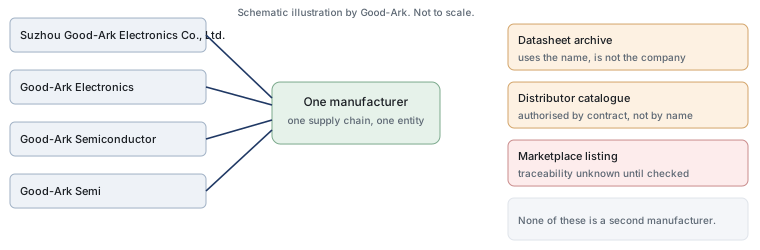 Good-Ark, Good-Ark Semi, or Good-Ark Semiconductor? Sorting Out the NamesKnowledge
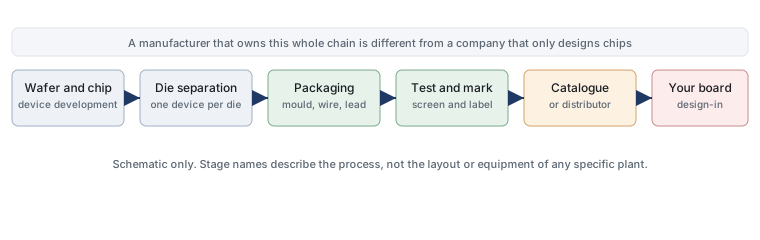 Good-Ark Semiconductor Explained for People Who Do Not Work in ElectronicsKnowledge
 What Is Good-Ark? A Plain-Language Guide to the Brand Behind Millions of Tiny PartsKnowledge
 How Do Solar Garden Lights Work? (And Why So Many Die)Knowledge