Good-Ark — discrete power semiconductors: rectifiers, Schottky, TVS, MOSFETs, SiC and IGBT
Request a Quote
Good-Ark Engineering Blog

Articles

Browse Good-Ark engineering articles by rectifiers, protection, automotive, MOSFET, SiC, solar, Schottky, power supply, bridge, Zener, and sourcing topics.

Suzhou Good-Ark Electronics — discrete power semiconductor manufacturer

RoHS and Halogen-Free Compliance for Power Components: A Practical Guide
RoHS and Halogen-Free Compliance for Power Components: A Practical Guide

The counter-intuitive part of RoHS and halogen-free compliance for power components is that a passing claim can still leave you short of evidence. A diode can be RoHS compliant while it still contains lead under a named, time-bounded exemption. A halogen-free line on a datasheet is a material claim with a stated standard and scope, … Read more

Automotive-Grade vs Commercial-Grade Semiconductors: A Selection Framework

Updated: October 28, 2026 This page is a focused engineering note in the sourcing compliance cluster—use the checklists and links below to finish selection, not as a substitute for the datasheet. Topic hub: Avoiding counterfeit power semiconductors. Related deep-dives sit in the continue list at the end. Before release Pass criteria Ratings vs mission profile … Read more

Thermal Cycling and Power Cycling: Predicting Rectifier Life

Thermal Cycling and Power Cycling: Predicting Rectifier Life

A rectifier that survives a thousand laboratory cycles at one temperature swing can fail much earlier in a module whose swing is only slightly larger, or last far longer if the enclosure and the derating keep that swing down. The number that predicts field life is not the headline cycles-to-failure on a qualification slide. It … Read more

PV Module Qualification Context: Where Bypass Diodes Are Tested

Updated: November 13, 2026 PV module qualification exercises the bypass diodes in hot-spot endurance, thermal cycling, and junction-box tests, and the diode’s device data is the evidence behind the module’s result. This guide covers the IEC context, the tests that matter, and the supplier evidence to request. Module-Level Tests That Exercise Bypass Diodes The module … Read more

Surge and ESD Testing for Power Lines: HBM, IEC 61000-4-5, and ISO 7637

Surge and ESD Testing for Power Lines: HBM, IEC 61000-4-5, and ISO 7637

A purchasing file that lists “8 kV ESD” next to “600 W TVS” can look complete and still describe two different events. Human-body-model ESD on a component, IEC 61000-4-2 ESD on a finished port, IEC 61000-4-5 surge on an AC or DC power line, and ISO 7637 transients on a 12 V vehicle rail do not share the … Read more

Avoiding Counterfeit Power Semiconductors: Sourcing and Verification

Updated: October 26, 2026 Counterfeit power semiconductors enter the supply chain through gray-market listings, recycled parts, and forged documents, and the defense is a process: know the entry paths, check the signals, verify with equipment, buy through authorized channels, and react fast when a suspect part appears. This guide covers each step. Family-level information for … Read more

Rectifier Failure Modes: A Field Guide for Engineers

Rectifier Failure Modes: A Field Guide for Engineers

Updated: November 13, 2026 Rectifier failures arrive in four signatures—short, open, leaky, or intermittent—and each signature points to a small set of possible causes: electrical overstress, thermal damage, or assembly defects. This field guide maps each signature to its likely causes and gives a diagnostic order that starts before the part is removed from the … Read more

400 W vs 600 W TVS: Sizing the Pulse Energy Absorber

400 W vs 600 W TVS: Sizing the Pulse Energy Absorber

Updated: October 27, 2026 This page is a focused engineering note in the tvs esd surge cluster—use the checklists and links below to finish selection, not as a substitute for the datasheet. Topic hub: TVS diode selection guide. Related deep-dives sit in the continue list at the end. Before release Pass criteria Ratings vs mission … Read more

Schottky Thermal Runaway: How Leakage and Heat Feed Each Other

Schottky Thermal Runaway: How Leakage and Heat Feed Each Other

At 100 V reverse and the official 100 °C maximum leakage of the Good-Ark AMBRP10H100, 2.5 mA is 0.25 W of leakage power. The same part’s 25 °C maximum is 10 µA, or 1 mW at the same voltage. That 250-fold rise in the published cap is not a curiosity: leakage heat raises the junction, … Read more

Rectifier Overheating Causes: How to Diagnose and Fix Excess Heat

Updated: November 13, 2026 Rectifier overheating has three root causes—underrated current or duty, a failing thermal interface, or leakage growing with temperature—and a fixed measurement protocol followed by a fault tree finds the right one faster than a part swap. Measure the case temperature at steady state, work through the three branches in order, and … Read more

Incoming Inspection for Rectifiers: Datasheet Verification in Practice

Incoming Inspection for Rectifiers: Datasheet Verification in Practice

Updated: November 11, 2026 Incoming inspection is where the datasheet becomes the acceptance line: the visual and mechanical checks catch the obvious, the electrical spot checks verify the ratings, and the traceability ties every lot to its evidence. This guide covers the practice, the checks, and the sampling. Updated after a US/EN SERP and competitor-page … Read more

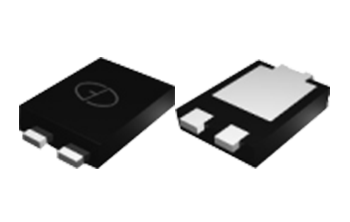
TO-277 (eSGC) Footprint and Thermal Design Guide

TO-277 (eSGC) Footprint and Thermal Design Guide

A lighting or ECU module can treat TO-277 (eSGC) as “the 5 A package” and still overheat at 5 A. The official catalog does not reserve 5 A for that outline alone. Good-Ark’s ASK5BA in SMA (DO-214AC) and ASK5BB in SMB (DO-214AA) are also AEC-Q101 qualified 5 A, 100 V Schottky rectifiers. What the TO-277 … Read more

Need a part number checked against your design?

Send the topology, current and voltage class. Good-Ark sales and application engineering will confirm the closest device, package and qualification status.

Copyright Suzhou Good-Ark Electronics Co., Ltd. All Rights Reserved