electronica Exhibitor Guide: How Buyers Can Work With Good-Ark At Global Trade Shows
electronica is one of the most important global platforms for electronics and semiconductor professionals to connect with suppliers, discover new technologies, and…

electronica is one of the most important global platforms for electronics and semiconductor professionals to connect with suppliers, discover new technologies, and make procurement decisions. For buyers and engineers who want to meet discrete semiconductor manufacturers like Good-Ark, a clear exhibitor guide makes it easier to plan booth visits, technical discussions, and follow-up evaluation.
Key Takeaways
- electronica is one of the most important global platforms for electronics and semiconductor professionals to connect with suppliers, discover new technologies, and make procurement decisions.
- Before you finalize the BOM, compare the related options: electronica Exhibitor Guide and electronica Visitor Guide.
- Confirm the part against the latest official datasheet before production release.
This article explains how to use electronica’s tools as a buyer, what to prepare before you meet Good-Ark’s team, and how to turn booth conversations into actionable sourcing and engineering decisions. It focuses on practical steps rather than event marketing hype, so you can make better use of your time on the show floor.
Understanding electronica As A Buyer-Oriented Platform
electronica is a professional trade fair that brings together component manufacturers, system providers, and electronics solution partners from around the world. Its exhibitor directory helps visitors search by company, product category, and application area, which is useful when planning to meet specific semiconductor suppliers.
Instead of treating electronica as a generic exhibition, buyers can treat it as a structured sourcing environment. Exhibitor listings and hall plans can be used to map out meetings with discrete device suppliers, compare product portfolios, and collect documentation that supports internal qualification workflows.
Why Meet Good-Ark At electronica
Good-Ark Electronics is a manufacturer focusing on discrete semiconductor devices such as diodes, rectifiers, and related components for a wide range of applications. Meeting Good-Ark at electronica allows buyers and engineers to align component needs with available product families, packaging options, and supporting documentation directly with the manufacturer rather than through indirect channels.
Good-Ark’s presence at major trade fairs supports face-to-face discussions on technical requirements, quality expectations, and long-term cooperation opportunities. Buyers can use the show environment to validate whether Good-Ark’s portfolio and engineering support fit their project timelines and qualification paths.
Preparing Before The Show
Effective exhibitor meetings start long before you step into the hall. Buyers and engineers can prepare for discussions with Good-Ark by organizing their internal requirements and documentation checklists.
Clarify your component needs
-
Define target device categories (for example, rectifier diodes, bridge rectifiers, transient voltage suppressors) and rough performance ranges, but avoid locking into exact values before discussion if these are still under review.
-
Identify key application areas such as SMPS, PV inverters, automotive subsystems, or industrial power supplies, which will guide conversations about typical use cases rather than single components.
Organize your internal constraints
-
List high-level qualification and compliance expectations, such as whether automotive, industrial, or consumer-level requirements are being considered, without assuming a specific certification set.
-
Document internal policies around documentation, including what your QA team needs to review (test reports, reliability data, and compliance statements) before approving a new supplier.
Check Good-Ark’s official information
-
Review Good-Ark’s company profile and official product categories on the brand’s English website to understand the general scope of its discrete semiconductor portfolio.
-
Familiarize yourself with Good-Ark’s official quality, environment, and compliance pages to understand how the company presents its management systems, certificates, and policies.
Using the electronica Exhibitor Directory To Find Good-Ark
electronica’s online exhibitor directory can be searched by exhibitor name, product category, and brand. Before the trade fair, buyers can use this directory to confirm whether Good-Ark is exhibiting, check the booth location, and identify neighboring suppliers for comparative discussions.
Once Good-Ark is confirmed as an exhibitor, buyers can bookmark the listing, note down hall and booth numbers, and add them to their personal show schedule. This helps ensure that critical conversations do not get lost among other meetings and sessions.
Planning Your Meeting With Good-Ark
A well-structured meeting at Good-Ark’s booth can save time and improve decision quality. Consider planning around three key phases: context sharing, technical fit, and qualification alignment.
Context sharing
-
Briefly explain your company’s main product lines and where discrete semiconductors fit into your systems.
-
Describe typical operating conditions, such as whether your designs target power conversion, protection, lighting, or mixed-signal control.
Technical fit discussion
-
Ask Good-Ark’s engineers or sales representatives which product families are commonly used in similar application areas, without assuming universal compatibility.
-
Request product overviews, application notes, or know-how documents that explain typical circuit topologies and design considerations for Good-Ark’s devices.
Qualification and documentation alignment
-
Discuss the type of quality management, qualification certificates, and compliance documentation your organization needs to review during supplier onboarding.
-
Ask Good-Ark to confirm available options and documentation before project approval, especially for projects in regulated markets or critical applications.
Key Topics To Cover With Good-Ark At The Booth
When talking with Good-Ark at electronica, buyers and engineers can focus on structured topics that mirror internal design and procurement processes. These topics help make booth discussions more actionable.
Product families and coverage
-
Ask which categories of diodes and rectifiers Good-Ark focuses on, and in what application contexts they are commonly used.
-
Explore whether there are dedicated product lines aimed at specific application clusters such as SMPS, PV inverters, or automotive subsystems, without assuming the scope of certification.
Package and outline considerations
-
Discuss available package options (for example, leaded versus surface-mount, compact QFN/DFN-style outlines, and power packages) that match your PCB and thermal design practices.
-
Confirm package, electrical characteristics, and application fit before ordering, especially where space and thermal constraints are critical.
Application know-how and design support
-
Request high-level application guidance or know-how materials that explain how discrete devices are typically used in various power and protection circuits.
-
Ask whether Good-Ark provides general product application know-how that can help your engineers review typical use cases and common design pitfalls.
Quality, environment, and compliance
-
Ask about Good-Ark’s overall quality management approach and how it manages documentation for audits and customer reviews.
-
Request information about environmental and safety policies that may be relevant to your internal compliance teams.
How Buyers Should Evaluate Exhibitor Information
Trade fair discussions are valuable, but they are only one part of supplier evaluation. Buyers and engineers can use the information gathered from Good-Ark at electronica as input to structured internal processes.
Cross-check with official documentation
-
After the show, revisit Good-Ark’s official website to cross-check product categories, general technical descriptions, and quality-related information against your meeting notes.
-
Request formal documents and samples through official channels, rather than relying on verbal statements alone, before making compliance or performance claims in your own organization.
Align with internal qualification workflows
-
Share Good-Ark’s general information and collected documentation with your engineering, quality, and purchasing teams for review.
-
Device and system compatibility depends on circuit design, operating conditions, qualification requirements, and regional compliance needs, so internal teams should validate fit rather than relying only on trade fair impressions.
Compare with other exhibitors
-
Use electronica’s directory and hall layout to compare the overall positioning of different discrete semiconductor suppliers.
-
Focus on how each supplier supports documentation, quality management, and application know-how, not just on headline marketing statements.
Procurement Best Practices When Meeting Semiconductor Exhibitors
Good-Ark is one of many semiconductor manufacturers a buyer might meet at electronica. To make trade fair visits efficient and low-risk, it helps to follow general procurement best practices when interacting with all exhibitors.
Be cautious with unverified claims
-
Avoid treating booth conversations or marketing leaflets as formal evidence for certifications, ratings, or performance claims.
-
Request documentation before making compliance claims to internal customers or regulators.
Focus on long-term cooperation potential
-
Ask exhibitors how they support ongoing communication, technical updates, and documentation refreshes as product families evolve.
-
Consider whether the supplier’s approach to quality, environment, and information security aligns with your company’s expectations for long-term projects.
Use structured follow-up
-
Immediately after the fair, send concise follow-up messages summarizing key discussion points and requesting any missing documents.
-
Maintain a shared internal record of trade fair outcomes so that future sourcing decisions can reference past exhibitor interactions.
Typical electronica Use Cases For Good-Ark Buyers
Buyers and engineers from different segments often use electronica to address specific challenges related to discrete semiconductors. While every project is unique, several common use cases illustrate how Good-Ark exhibits can fit into broader sourcing and design workflows.
Power conversion projects
Teams working on SMPS or power conversion stages often visit discrete device manufacturers to discuss rectification, clamping, and protection elements. They use trade fairs to identify product families that are commonly applied in similar circuits and to gather application notes that help refine design decisions.
Renewable and industrial systems
Engineers focused on PV inverters or industrial motor drives use electronica to compare high-level approaches to power and protection devices across different suppliers. Meeting Good-Ark allows them to understand how the manufacturer positions its discrete portfolio for such applications, and which documentation is typically provided.
Automotive and transportation
Automotive and transportation teams may use electronica to review potential component suppliers for lighting, auxiliary power, or protection subsystems. These teams often focus less on single devices and more on qualification pathways, environmental considerations, and long-term documentation management.
Frequently Asked Questions (FAQ)
How can I confirm whether Good-Ark will exhibit at the next electronica?
Check electronica’s official exhibitor directory close to the event dates and search by company name. Then combine that information with any official announcements published by Good-Ark on its English website.
What should I bring to a meeting with Good-Ark at electronica?
Bring a clear outline of your project’s application context, rough device categories, internal qualification expectations, and any questions about documentation or package fit. This helps Good-Ark’s team focus the discussion on practical next steps instead of general introductions.
Can electronica replace a formal supplier qualification process?
No. electronica is best used as a starting point to identify potential suppliers, gather high-level information, and request documentation. Formal qualification should still run through your company’s established engineering, quality, and compliance workflows.
How should I handle performance claims made at exhibitor booths?
Treat any performance or certification claims as preliminary until supported by official documentation. Ask exhibitors to provide data sheets, qualification overviews, and policy documents, and then involve your internal experts to evaluate the information.
Is it better to meet Good-Ark at electronica or contact the company directly?
Both approaches complement each other. Meeting at electronica allows for context-rich discussions with multiple stakeholders present, while direct contact through official channels supports structured follow-up, documentation exchange, and long-term communication.
Related Good-Ark Resources
Related Articles
References
- electronica – World’s Leading Trade Fair for Electronics
- electronica – Exhibitors of Diodes (Semiconductors)
- GlobeNewswire – Empower Semiconductor Showcases Vertical Power Architecture at electronica 2024
- Semiconductor Engineering – Power Semis Usher in the Silicon Carbide Era
- Power Electronics News – Modern Telecom and Data-Center SMPS Powered by Si, SiC and GaN
Recommended
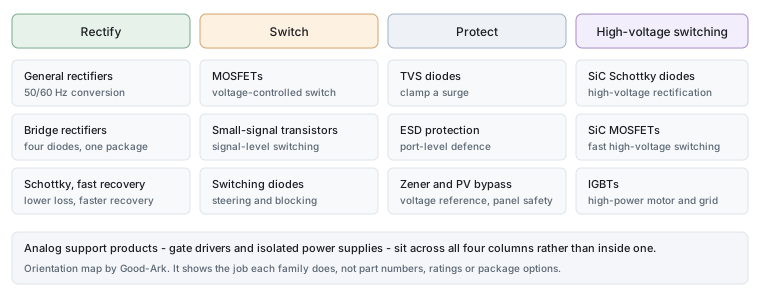 What Does Good-Ark Electronics Actually Make? A Beginner’s Look at the Product LineKnowledge
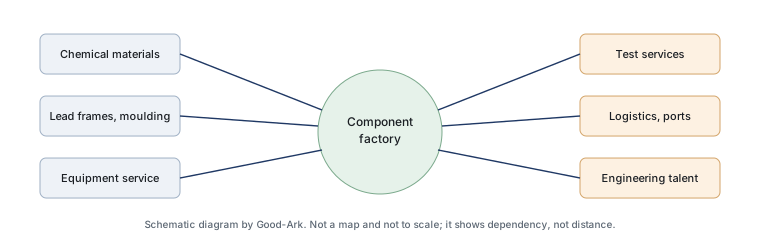 Suzhou Good-Ark: Why a Component Maker’s Home City Matters More Than You ThinkKnowledge
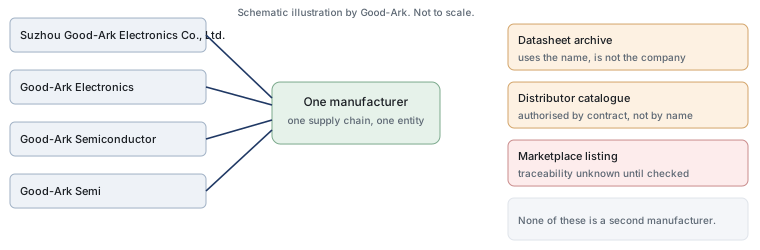 Good-Ark, Good-Ark Semi, or Good-Ark Semiconductor? Sorting Out the NamesKnowledge
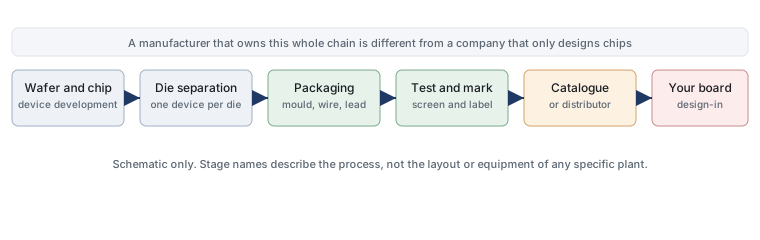 Good-Ark Semiconductor Explained for People Who Do Not Work in ElectronicsKnowledge
 What Is Good-Ark? A Plain-Language Guide to the Brand Behind Millions of Tiny PartsKnowledge
 How Do Solar Garden Lights Work? (And Why So Many Die)Knowledge