Good-Ark — discrete power semiconductors: rectifiers, Schottky, TVS, MOSFETs, SiC and IGBT
Request a Quote

What Is Inside a PC Power Supply? A Beginner’s Teardown Guide
What Is Inside a PC Power Supply? A Beginner’s Teardown Guide

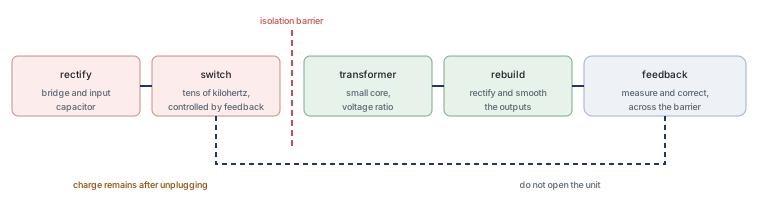
A desktop power supply converts the alternating current from the wall socket into three steady direct voltages that the computer uses: 12 V for the processor and graphics card, 5 V and 3.3 V for the rest. It does that with the same five stages as any switching converter — rectification, switching, a transformer, output … Read more
What Is Inside a Power Bank?

What Is Inside a Power Bank?

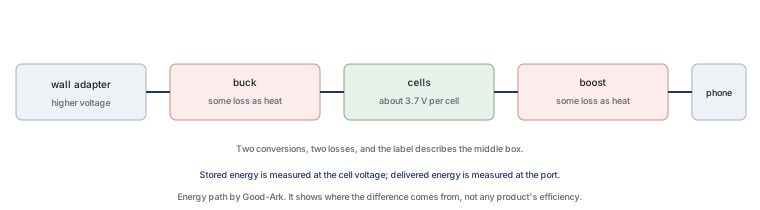
Inside a power bank there are four blocks: cells that store energy, a converter that changes the cell voltage into the voltage your device expects, protection circuitry that keeps the cells inside their safe operating range, and the connectors and indicator that connect all of it to the outside world. The gap between the number … Read more

Bypass Diode Failures in the Field: Hot Spots, Thermal Stress, and How to Diagnose On-Site

Bypass Diode Failures in the Field: Hot Spots, Thermal Stress, and How to Diagnose On-Site

PV bypass diode failures appear as string underperformance or a damaged junction box, and the evidence chain runs from the shading pattern to the junction-box temperature. This guide covers the failure mechanisms, the hot-spot damage patterns, the thermal evidence, and the module-versus-device attribution. Last updated: October 16, 2026 Why Bypass Diodes Fail in the Field … Read more

Blocking vs Bypass Diodes in Solar Arrays: Who Blocks What and Where the Difference Sits

Blocking vs Bypass Diodes in Solar Arrays: Who Blocks What and Where the Difference Sits

Two diodes protect a solar array, and they share names that sound interchangeable. The bypass diode protects the module from shading; the blocking diode protects the battery and the string from reverse current. The placement gives them away: the bypass diode sits in parallel with a substring inside the module, and the blocking diode sits … Read more

Zener, Avalanche and TVS Diodes: Breakdown and Rating Differences

Zener and avalanche describe reverse-breakdown mechanisms; TVS describes a transient-protection function. These terms overlap. Choose a diode by its specified operating duty and limits, rather than treating the three names as interchangeable part categories. Last updated: October 16, 2026 Separate the mechanism from the component function A reverse-biased junction can conduct in breakdown through tunneling, … Read more

Need a part number checked against your design?

Send the topology, current and voltage class. Good-Ark sales and application engineering will confirm the closest device, package and qualification status.

Copyright Suzhou Good-Ark Electronics Co., Ltd. All Rights Reserved